
“If you described the human body to an engineer, they’d assume you’re lying.”
We walk around every day thinking we’re simple creatures.
Eat. Sleep. Scroll. Repeat.
But under the surface?
You’re basically a walking laboratory experiment that somehow passed quality control.
Your body bends physics, rewrites chemistry, and casually performs tricks that sound like they belong in a superhero movie.
The wild part is that none of this is rare or mystical. It’s just biology doing its thing while you worry about your emails.
Let’s talk about the real medical facts that make you stop mid-sentence and say, “Wait… my body does WHAT?”
“Your bones are stronger than concrete”
Yes, really.
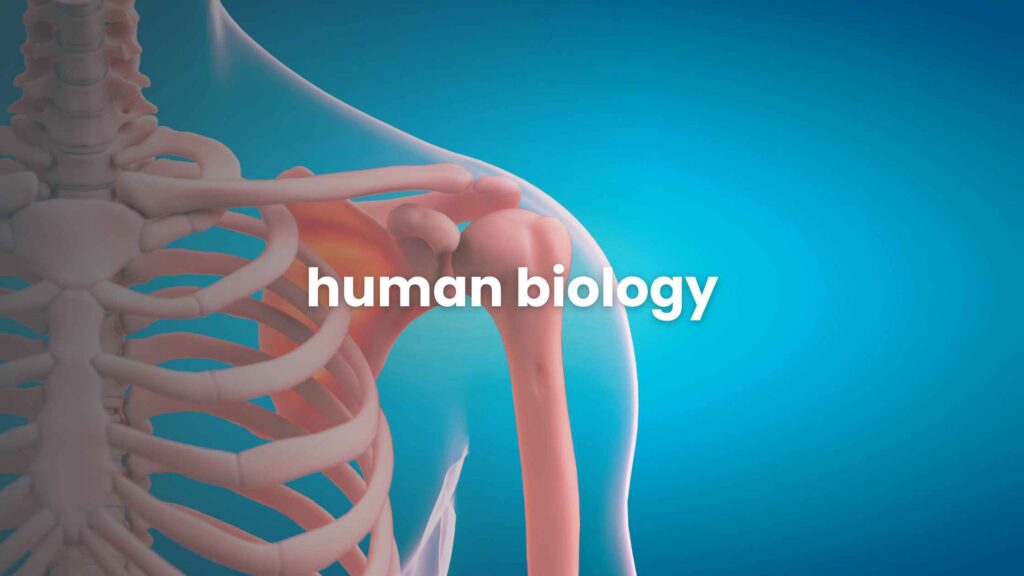
Pound for pound, human bone is stronger than steel and concrete under compression.
Studies in biomechanics show that a cubic inch of bone can withstand loads of several thousand pounds. That’s roughly the weight of a small car.
Which means your skeleton is not fragile glass like it feels after age thirty. It’s more like reinforced architecture.
Of course, bones still break because force and angles matter. Physics always wins.
But strength-wise? You’re basically walking around with internal construction beams.
Home Depot energy.
“Your body glows in the dark”
Not metaphorically. Literally.
Researchers using ultra-sensitive cameras discovered that humans emit tiny amounts of visible light.
This phenomenon is called biophoton emission. It happens because chemical reactions in your cells release small packets of light during metabolism.
The glow is about 1,000 times too faint for your eyes to see. So sadly, you won’t sparkle like a vampire in sunlight.
But technically?
You are glowing right now.
Just very shy about it.
“You have more bacteria than human cells”
This one humbles everyone.
For every human cell you have, you carry roughly the same number or more bacterial cells, especially in your gut.
Microbiome research shows these microbes help digest food, regulate your immune system, and even influence mood.
So when you say, “I’m not feeling myself today,” science might respond, “Correct. Your bacteria are in charge.”
You are less of an individual and more of a very organized ecosystem.
Basically a walking planet.
“Your nose can remember 50,000 different smells”
We talk a lot about eyesight and hearing, but smell is wildly underrated.
Neuroscience studies suggest humans can distinguish tens of thousands of scents, sometimes more.
And smell is tightly connected to memory because it links directly to emotional brain centers.
That’s why one random scent can instantly teleport you back to childhood or remind you of someone you haven’t seen in ten years.
One second you’re buying groceries.
Next second you’re eight years old at your grandma’s kitchen.
Time travel, but make it nasal.
“Your heart creates enough pressure to spray blood several meters”
Not the most relaxing image, but fascinating.
Cardiology measurements show your heart pumps with enough force to move blood several meters if released into open air.
That pressure is what keeps oxygen reaching your brain, toes, and everywhere in between.
And it does this nonstop.
About 100,000 beats per day.
No breaks. No holidays. No “I’m tired today.”
Meanwhile we complain after one flight of stairs.
Your heart deserves better PR.
“You’re constantly replacing your skeleton”
Here’s something wild.
Your bones aren’t permanent structures. They’re living tissue that continuously breaks down and rebuilds.
This process, called remodeling, replaces most of your skeleton roughly every ten years.
Meaning the bones you had a decade ago are mostly gone.
You are literally not walking on the same skeleton you used to have.
It’s like upgrading your hardware without noticing.
Free updates. No subscription required.
“Pain is sometimes optional”
This sounds fake, but certain people are born with a condition called congenital insensitivity to pain.
They physically cannot feel pain signals.
While it sounds like a superpower, it’s actually dangerous. Pain protects us. It warns us to stop touching hot stoves or walking on broken ankles.
Without pain, small injuries become serious fast.
So the next time you stub your toe and curse the universe, remember: that pain is your body screaming, “Hey genius, stop doing that.”
Annoying. But helpful.
Why Your Body Is Stranger Than You Think
The more scientists study the human body, the less ordinary it looks.
You glow.
You rebuild yourself.
You host an army of microbes.
You carry industrial-strength bones.
And all of this happens quietly while you drink coffee and scroll social media.
It’s oddly comforting.
Because if your body can manage millions of complex processes every second without asking for permission, maybe you’re more resilient than you think.
You’re not fragile.
You’re biological science fiction wrapped in sweatpants.