
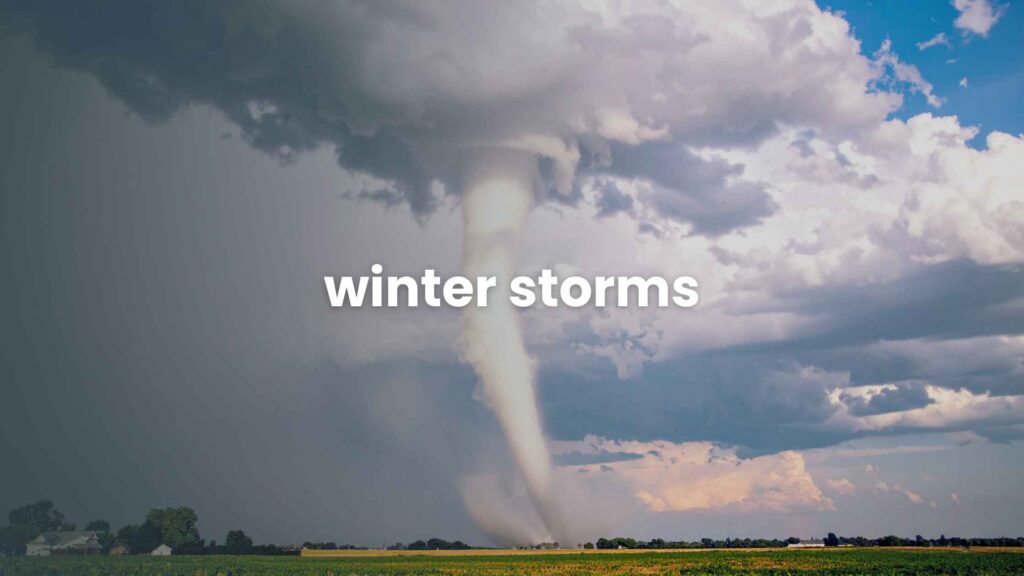
January feels like the wrong month for tornadoes. Snow on the news. Thick coats by the door. Yet in parts of the southern United States, winter tornado warnings are not an anomaly. They are a pattern many people still underestimate.
“Tornado season doesn’t follow the calendar”
The idea that tornadoes belong only to spring is a cultural myth, not a scientific rule. Meteorological research has long shown that the Southeast experiences a secondary peak of tornado activity during winter months, especially January and February.
The key difference is not frequency alone, but surprise.
Warm air has a long memory
The southern U.S. sits in a unique position where warm, moist air from the Gulf of Mexico can still surge northward in winter. When that air collides with cold fronts descending from the Rockies or the Midwest, the atmosphere becomes unstable fast.
Unlike summer storms that build gradually, winter systems often arrive fully armed. Strong wind shear, rapid temperature contrasts, and fast moving fronts create ideal tornado conditions, sometimes within hours.
“They come at night, and that makes them deadlier”
One of the most dangerous aspects of January tornadoes is timing. Studies on tornado fatalities consistently show that nighttime tornadoes result in higher death rates. People are asleep. Sirens go unheard. Warnings feel unreal at 2 a.m.
The Southeast also has more trees, hills, and buildings than the open plains. That geography reduces visibility and makes radar detection harder.
The Southeast problem nobody talks about
Unlike the Midwest, where basements are common, many southern homes lack underground shelter. Mobile homes are also more prevalent, and they are especially vulnerable to high winds.
Sociological research on disaster risk highlights how housing type and income inequality amplify weather threats. In other words, the tornado itself is only part of the danger.
Climate change complicates the picture
Scientists are cautious about linking individual tornadoes directly to climate change. However, broader research shows that warming oceans increase atmospheric moisture, which fuels stronger storms year round.
What is changing is not just how many storms occur, but when and where the most intense ones appear. Winter tornado environments are becoming more favorable, particularly in the Southeast.
“Cold doesn’t cancel chaos”
A common misconception is that cold weather shuts down severe storms. In reality, it only shifts the dynamics. Winter tornadoes often move faster, cover longer paths, and give less warning time than their spring counterparts.
They are quieter too. No towering thunderheads. Just rain, wind, and suddenly, rotation.
Living with the risk
Meteorologists emphasize preparation over prediction. January tornadoes are not rare events anymore. They are a known feature of the southern climate.
Understanding that reality changes how people respond. Weather radios stay on year round. Emergency plans include winter nights, not just spring afternoons.
The part we tend to forget
Tornadoes feel cinematic in spring. In January, they feel wrong. That disconnect is what makes them dangerous.
Nature does not care about our seasonal expectations. The atmosphere follows physics, not tradition.