
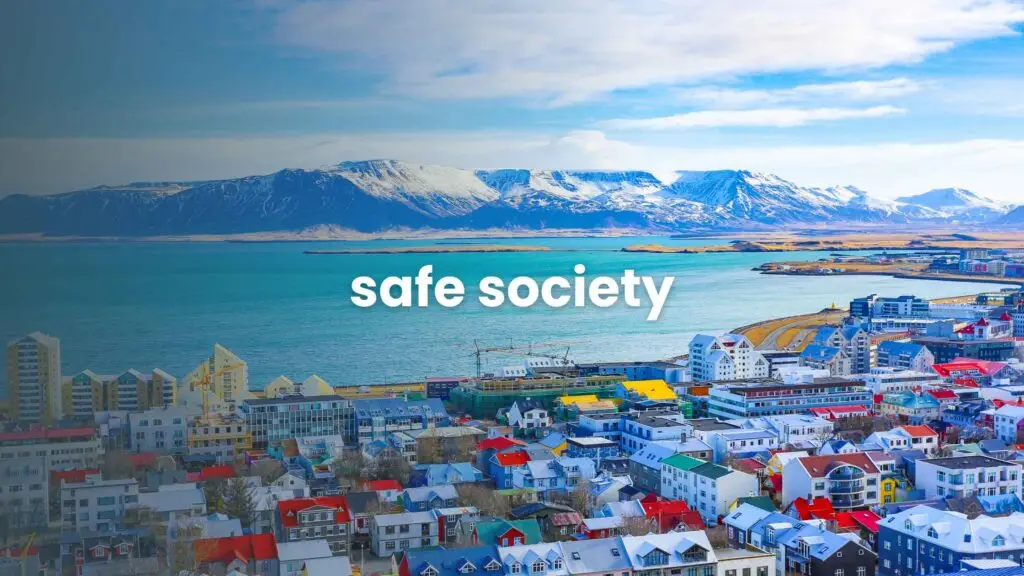
“A Nation Without Fear: What Makes Iceland So Safe?”
Iceland, a remote island in the North Atlantic, is often recognized for its breathtaking landscapes, geysers, and Northern Lights. However, one of its most remarkable features isn’t natural but societal: it consistently ranks as one of the safest countries in the world, with an astonishingly low crime rate. But why is crime almost nonexistent in Iceland? And can other countries adopt some of these factors to create safer societies?
The Numbers Don’t Lie: Iceland’s Crime Statistics
According to the Global Peace Index, Iceland has been ranked the safest country in the world for over a decade. The country boasts a homicide rate close to zero—with some years passing without a single murder. Additionally, violent crime, including assaults and robberies, is rare.
To put things into perspective, let’s compare Iceland to other nations:
| Country | Homicide Rate (per 100,000 people) | Global Peace Index Rank |
|---|---|---|
| Iceland | ~0.3 | #1 |
| United States | 5.0 | #129 |
| United Kingdom | 1.2 | #37 |
| Brazil | 22.0 | #132 |
(Source: UNODC & Global Peace Index 2023)
1. A Small, Close-Knit Society
“When everyone knows everyone, crime doesn’t stand a chance.”
With a population of just over 370,000 people, Iceland functions like a close-knit community. This creates a high level of social trust and a strong sense of responsibility among citizens. People feel more accountable for their actions because their reputation within the community is at stake.
In many larger countries, crime often flourishes in anonymous, disconnected societies where people feel isolated. Iceland’s small population fosters connection, making it harder for criminal behavior to go unnoticed.
2. A Well-Functioning Welfare System
“When basic needs are met, crime loses its grip.”
Iceland provides its citizens with universal healthcare, free education, and strong social support programs. This minimizes financial desperation—one of the leading factors behind crime in many countries. In contrast, in countries with stark wealth inequality, crime often becomes a means of survival.
The Scandinavian welfare model ensures that no one is left behind, reducing the motivation for crimes related to poverty, such as theft or fraud.
3. An Educated and Informed Society
“Knowledge is power—and safety.”
Iceland has a 99% literacy rate, and education is prioritized. Well-educated populations are statistically less likely to engage in crime, as education opens doors to opportunities and fosters critical thinking.
Additionally, Iceland’s prison system focuses on rehabilitation rather than punishment. With an emphasis on reintegration, ex-convicts have access to education and employment opportunities, reducing the likelihood of reoffending.
4. A Low-Pressure Police Force
“Policing through respect, not fear.”
One of the most striking features of Iceland is that its police officers do not carry guns. This is possible due to the lack of violent crime, but it also creates an environment where trust between the public and law enforcement remains high.
The Icelandic police force is trained in de-escalation techniques rather than aggressive tactics, which contrasts with many other countries where policing is often militarized. The result? Fewer violent encounters and a society that sees law enforcement as a protector rather than a threat.
5. Low Drug and Gang Activity
“No gangs, no turf wars, no unnecessary violence.”
Unlike many nations struggling with organized crime, Iceland has virtually no gang activity. The country’s isolation and strict regulations make it difficult for international criminal organizations to gain a foothold.
Additionally, drug-related crimes are much lower than in many other Western nations. While Iceland is not completely free of substance abuse, the government focuses on treatment and prevention rather than incarceration, ensuring that individuals struggling with addiction receive help instead of harsh punishment.
What Can Other Countries Learn from Iceland?
While Iceland’s low crime rate is influenced by its unique geography and small population, there are key takeaways that larger nations could implement:
✔ Invest in social welfare: Ensuring that basic needs are met can reduce crimes linked to poverty. ✔ Focus on rehabilitation over punishment: A justice system that supports reintegration prevents repeat offenses. ✔ Train police in de-escalation: Non-militarized policing fosters trust between law enforcement and citizens. ✔ Encourage community engagement: A strong sense of belonging reduces anonymity-driven crimes.
While no country can replicate Iceland’s conditions exactly, prioritizing social trust, education, and economic stability can lead to safer societies.