
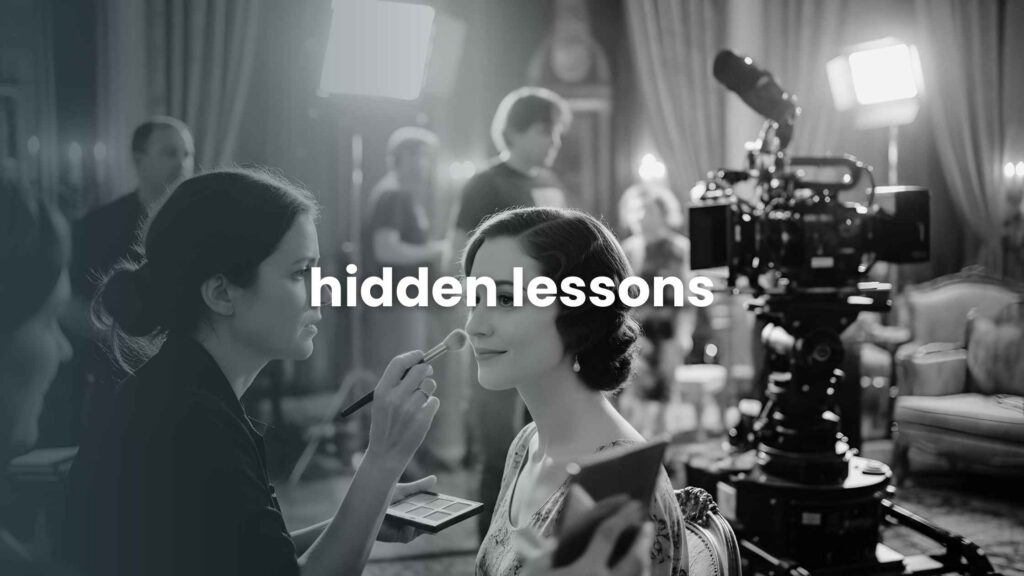
“We think we watch movies for entertainment, but they watch us back.”
Most people say movies are just a way to relax. Two hours. Popcorn. Escape.
But storytelling has never been neutral.
Popular films do something subtle. They normalize ideas, shape expectations, and teach emotional lessons without announcing themselves as teachers. You do not leave the cinema thinking, I just learned a life philosophy. Yet somehow, certain scenes stay with you for years.
That is not an accident.
Film psychology and media studies have long shown that repeated narratives influence how we understand success, love, morality, and even ourselves. Below are some of the quiet lessons mainstream movies keep reinforcing, whether we notice or not.
Hard Work Always Pays Off Eventually
“If you want it badly enough, the universe will meet you halfway.”
From sports dramas to superhero origin stories, one message appears again and again: persistence guarantees success. The underdog trains harder, sacrifices more, and finally wins.
Psychology research on narrative influence shows that these stories can increase motivation, but also create unrealistic expectations. In real life, effort improves odds, not outcomes. Timing, privilege, health, and pure chance play larger roles than movies admit.
The lesson movies teach is comforting.
The lesson reality teaches is complicated.
Still, that montage makes you want to try.
Love Is Supposed to Feel Intense and Effortless
“If it is real, it should not be this hard.”
Romantic films often portray love as immediate, overwhelming, and destiny-driven. Conflict exists, but it is temporary. If the chemistry is strong enough, everything else works out.
Relationship research paints a different picture. Long-term satisfaction is more strongly linked to communication, emotional regulation, and shared values than constant passion.
Movies rarely show healthy boredom, quiet consistency, or growth through routine. Those do not sell tickets.
They do shape expectations though, which explains why real relationships sometimes feel like they are missing background music.
Good People Are Rewarded, Bad People Are Punished
“The moral arc bends neatly in movies.”
Mainstream films often rely on clear moral structure. Heroes suffer, but win. Villains fall. Justice arrives before the credits roll.
Media psychology research suggests this reinforces what is known as the just-world belief, the idea that life is fundamentally fair. It helps us cope emotionally, but it is not consistently accurate.
In real life, good people sometimes lose and bad behavior often goes unpunished. Movies simplify morality because ambiguity is uncomfortable.
We like our ethics with resolution.
One Moment Can Change Everything
“All it takes is one decision.”
Many films revolve around a single turning point. One audition. One conversation. One brave choice that alters an entire life trajectory.
While major events do matter, behavioral science shows that life outcomes are more often shaped by small, repeated actions over time. Habits outperform heroics.
Movies compress time to make stories compelling. Life unfolds slowly and without dramatic lighting.
Still, believing change is possible in a moment can be powerful. Even if the real work happens afterward.
Pain Makes You Stronger by Default
“Suffering builds character.”
Characters experience loss, failure, and trauma, then emerge wiser and stronger. Growth follows pain almost automatically.
Psychological research on post-traumatic growth shows that growth is possible, but not guaranteed. Many people experience long-term distress instead. Support systems, meaning-making, and safety play huge roles.
Movies often skip the messy middle. Therapy, setbacks, and years of quiet recovery rarely make the final cut.
Pain does not automatically teach lessons. People do, when given the tools.
Identity Is Something You Discover, Not Build
“You just have to find your true self.”
Films love the idea of a hidden, authentic self waiting to be uncovered. The character removes expectations and finally becomes who they were meant to be.
Modern psychology leans toward a different view. Identity is largely constructed through choices, roles, and repetition. You do not find yourself. You practice yourself.
Movies prefer destiny. Life prefers consistency.
Both are exhausting in different ways.
Friendship Is the Real Safety Net
“You do not win alone.”
Even action-heavy blockbusters circle back to this truth. Allies matter. Loyalty matters. Someone has your back when things collapse.
Social psychology strongly supports this lesson. Strong social connections are linked to better mental health, resilience, and even physical longevity.
Movies exaggerate the drama, but not the core idea. Humans survive better together.
That one might be the most accurate lesson of all.
Why These Lessons Stick
“Stories bypass logic and go straight to belief.”
Films work because they engage emotion first and reasoning second. Neuroscience research shows that emotional storytelling increases memory retention and belief integration.
We remember how a movie made us feel long after we forget the plot. Those feelings quietly inform our worldview.
Movies do not tell us what to think. They show us what to feel repeatedly.
And feelings are persuasive.
What To Do With This Awareness
“You can enjoy the story without outsourcing your values.”
None of this means movies are harmful or manipulative by default. Stories help us explore fear, hope, ambition, and connection safely.
Awareness simply gives you choice. You can take inspiration without absorbing unrealistic standards. You can enjoy romance without expecting perfection. You can admire heroes without waiting for a montage to change your life.
Movies are mirrors, not manuals.
They reflect what we long for, not necessarily what works.