
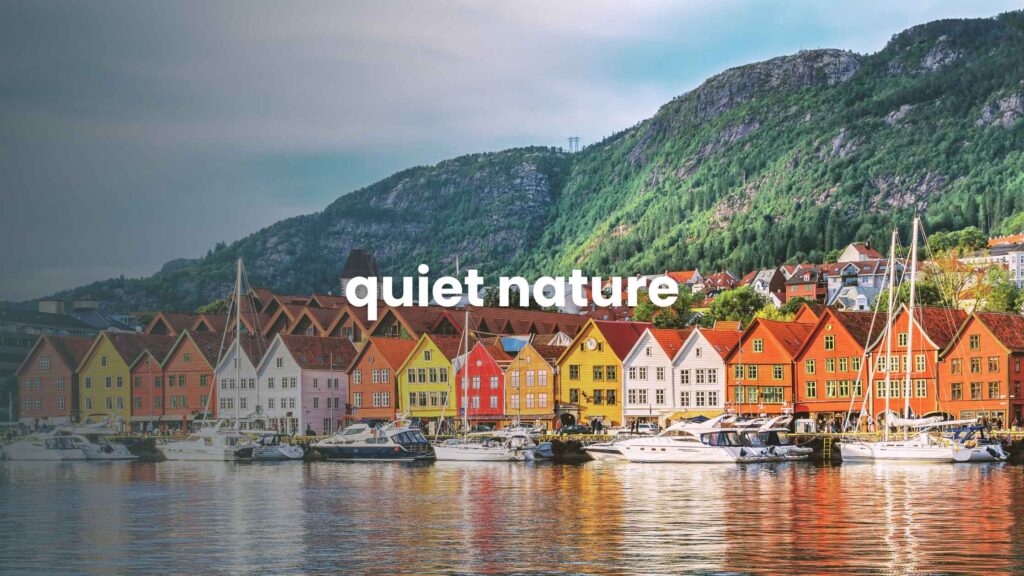
“There is no hurry outside.”
In Norway, mental health is not only discussed in clinics or self help books. It is practiced quietly, often with muddy boots, cold fingers, and a thermos of coffee. The word that captures this mindset is friluftsliv. Roughly translated, it means open air life. But that translation barely scratches the surface.
Friluftsliv is not about extreme sports or conquering nature. It is about existing in it. Calmly. Regularly. Without turning it into content.
“Nature is not an escape, it is the baseline.”
The idea dates back centuries and was popularized in the 1800s as a response to industrialization. While cities grew louder and faster, Norwegians held on to the belief that humans function better when nature remains part of everyday life.
Modern psychological research supports this. Studies in environmental psychology consistently show that time spent in natural environments lowers cortisol levels, improves mood, and restores attention. Even short walks in green spaces can reduce symptoms of anxiety and mild depression.
In Norway, this is not advice. It is habit.
“There is no bad weather, only bad clothing.”
This saying is repeated early and often. Children nap outside in strollers during winter. Schools hold outdoor classes. Offices expect people to take daylight breaks.
The mental health benefit is not only the fresh air. It is the removal of pressure. Nature does not ask for performance. You do not have to optimize yourself on a trail. You just walk, sit, breathe, or stare at water long enough for your thoughts to loosen their grip.
“Silence does not need to be filled.”
Friluftsliv also shapes social expectations. Being quiet together is normal. Conversation is optional. This matters more than it sounds.
Research on overstimulation suggests that constant noise and digital input keep the nervous system in a low level stress state. Nature, especially quieter environments like forests and coastlines, helps shift the brain back toward calm regulation.
Norwegians do not frame this as stress management. They simply see it as how life is supposed to feel.
“You do not need a reason to go outside.”
Perhaps the most revealing part of friluftsliv is its lack of purpose. There is no step counter, no transformation goal, no productivity angle. You go outside because it is Tuesday. Or because the light looks nice. Or because staying in feels wrong.
That absence of pressure may be the most powerful mental health lesson of all.
In a world that treats wellbeing as another task to complete, friluftsliv quietly suggests something radical. You do not need to fix yourself. You may just need to step outside and let your nervous system remember what normal feels like.