
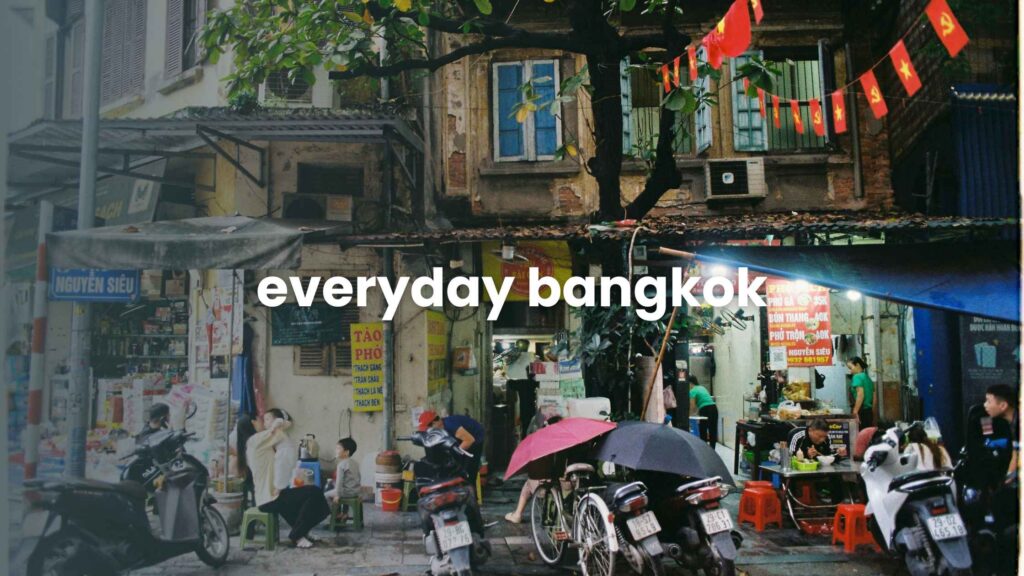
Bangkok looks expensive from the outside. Rooftop bars, luxury malls, infinity pools that pretend gravity does not exist. But daily life for most locals happens far away from cocktail menus and skyline selfies.
To understand the city, you have to look at salaries, rent receipts, food stalls, and the quiet math people do every month.
So let’s step into an ordinary Bangkok life. No influencers. No exaggeration. Just reality.
“Bangkok is affordable, but only if you know where to stand.”
Meet Somchai and Nok
Somchai is 32 and works as an administrative assistant at a logistics company. Nok is 29 and works in a small clothing shop near Victory Monument.
Somchai earns around 18,000 THB per month, roughly 500 USD.
Nok earns 15,000 THB, about 415 USD.
Together, they live modestly but independently.
According to Thailand’s National Statistical Office, many service and office workers in Bangkok earn between 15,000 and 20,000 THB per month, which translates to roughly 415 to 555 USD. This is normal, not extreme.
Rent: small space, big priority
Somchai and Nok rent a studio apartment in an older building, about 30 square meters. No pool. No gym. A fan and an aircon unit that works when it feels like it.
Monthly rent: 6,500 THB, around 180 USD
Utilities: about 1,200 THB, roughly 33 USD, assuming careful aircon use
That means housing and basic utilities already cost them more than 210 USD per month.
Urban housing research in Bangkok shows rent often consumes 30 to 40 percent of a local income, especially near BTS or MRT lines. Living farther away lowers rent but raises transport costs.
“Aircon is not a luxury, it is a monthly negotiation.”
Food: where Bangkok saves you
This is where the city becomes kind.
Somchai eats street food for lunch. Nok often brings food home from nearby stalls. These meals are fresh, filling, and fast.
Typical local meal: 40 to 60 THB, about 1.10 to 1.70 USD
Combined monthly food budget: roughly 6,000 THB, or 165 USD
Eating like a tourist multiplies costs quickly, but local food culture keeps daily expenses manageable.
Consumer price studies and regional cost of living data consistently show Bangkok’s food prices are low relative to income, as long as people eat where locals eat.
“Street food is not a trend here, it is survival with flavor.”
Transport: time is money, traffic is reality
Somchai uses buses and the BTS. Nok mostly walks and takes motorbike taxis when running late.
Monthly transport costs:
Somchai: 1,200 THB, about 33 USD
Nok: 700 THB, about 19 USD
Owning a car is rare at this income level. Fuel, parking, maintenance, and insurance quickly exceed what the numbers allow.
Transport studies in Bangkok often highlight that commuting time, not just cost, plays a major role in quality of life.
The invisible costs
Phone plan: 300 THB, about 8 USD
Basic medicine and health expenses: 500 THB, about 14 USD
Occasional clothes or household items: 800 THB, about 22 USD
Entertainment is modest. A movie once in a while. A drink from a convenience store instead of a bar.
In a good month, Somchai saves around 1,000 THB, roughly 28 USD.
Nok often saves nothing when family expenses appear.
Financial stress research shows that for many urban workers, instability comes not from luxury spending but from how quickly one unexpected expense can erase savings.
“Saving is not a habit when survival needs attention first.”
The emotional side of the numbers
Life on a local salary is not miserable. It is structured. Careful. Quietly resilient.
People laugh. They eat well. They socialize. But long term plans feel distant.
Buying property is unrealistic.
Medical emergencies are frightening.
Career growth is slow but still hoped for.
Yet many locals would not trade Bangkok life for anything else. The city offers convenience, culture, and connection in ways income charts fail to measure.
What this life teaches you
Bangkok is not cheap, and it is not expensive. It is exact.
It rewards people who understand its rhythms and punishes those who assume comfort comes automatically. For millions, daily life is a balancing act performed with skill, patience, and humor.
And that is the part tourists rarely see.