
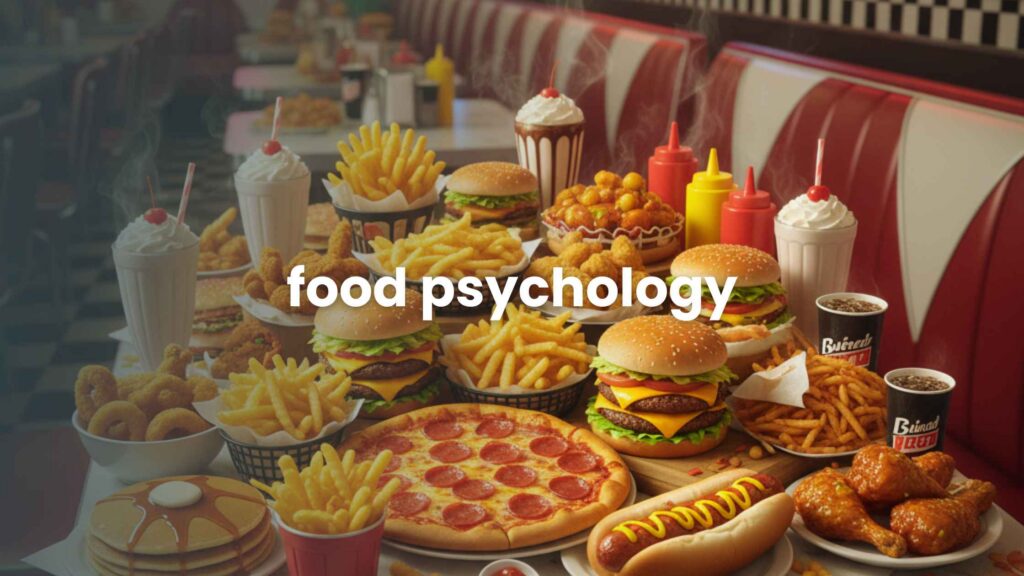
“It’s not just fast. It’s engineered.”
Fast food feels simple.
You order. You wait three minutes. You eat. You regret nothing. Or everything.
But behind that paper bag is an entire world of psychology, science, and strategy most people never think about.
Fast food is not just food. It’s behavior science. Supply chain precision. Marketing psychology. Chemistry.
And once you know what’s really happening behind the counter, you’ll never look at your fries the same way again.
In a good way. Mostly.
“The smell is not an accident”
Ever noticed how walking past a fast food place instantly makes you hungry? Even if you just ate?
That is not weak willpower. That is design.
Research in consumer psychology shows scent is one of the strongest triggers for impulse behavior. Certain smells activate memory and emotional centers in the brain faster than visual cues.
Many chains carefully engineer ventilation systems so food aromas drift toward sidewalks and entrances. The smell of fries or grilled meat can increase appetite even when you were not planning to eat.
Your nose decides before your brain does.
And your brain just goes along with it.
“The menu is built to control your eyes”
Next time you stand in front of a menu board, notice where your eyes go first.
Studies using eye tracking technology reveal that menu layouts guide attention toward high profit items. Items placed at the top right or highlighted visually tend to sell more.
Even the removal of currency symbols can influence spending. Research suggests that when prices appear without a dollar sign, customers perceive the purchase as less painful.
So when you think you “just felt like” ordering that combo upgrade, remember that design quietly nudged you there.
Subtle. Effective. Slightly impressive.
“The ice has rules”
Here is something most people never consider.
Ice in fast food drinks is often standardized for size and shape. Smaller cubes melt faster, affecting dilution and flavor timing. Larger cubes preserve carbonation longer.
Food science teams test these details carefully. The goal is consistency. The first sip in New York should taste like the first sip in Tokyo.
Consistency is one of the main reasons global chains succeed. Studies on brand loyalty repeatedly show that predictability builds trust.
You are not just buying soda. You are buying reliability.
“The fries are a science experiment”
Fries are not just sliced potatoes tossed in oil.
Food scientists study the exact sugar content of potatoes to control browning. The famous golden color happens through a chemical reaction between amino acids and sugars when heated.
Temperature precision matters. Oil too hot burns the exterior before the inside cooks. Too cool and they absorb excess oil.
Some companies even test the sound of the fry when bitten. Crispness has an acoustic signature, and research in sensory science shows sound influences how crunchy we perceive something to be.
Yes, your ears help you taste.
Your body is dramatic like that.
“Limited time offers are psychological”
Ever noticed how certain menu items disappear quickly?
That is scarcity at work.
Behavioral economics research shows that limited availability increases perceived value. When something feels temporary, we assign it more importance.
The pumpkin spice phenomenon did not happen by accident.
Fast food brands study timing, seasonal habits, and emotional associations. Holiday flavors create nostalgia. Nostalgia increases spending.
It is not manipulation. It is marketing strategy mixed with human nature.
And honestly, we fall for it every time.
“The speed is measured down to seconds”
Speed is the entire business model.
Operational studies in quick service restaurants track service time obsessively. A few seconds shaved off each order can significantly impact daily revenue.
Drive thru lanes are optimized like airport runways. Movement patterns, order confirmation timing, and even microphone clarity are tested to reduce friction.
Fast food is essentially logistics theater.
You see a burger.
They see a timed production system.
“Color psychology plays a role”
Why do so many fast food brands use red and yellow?
Color psychology research suggests red stimulates appetite and urgency. Yellow attracts attention and communicates speed.
These colors also photograph well and remain visible from long distances.
It is branding science wrapped in ketchup and mustard.
You thought it was random. It absolutely was not.
More Than Just a Meal
Fast food is easy to dismiss as unhealthy or simple. But behind that simplicity is an extraordinary amount of research, psychology, engineering, and strategy.
From scent design to menu placement, from fry acoustics to color theory, the experience is crafted carefully.
Not to trick you.
To understand you.
And maybe that is what makes it fascinating.
Because fast food is not just about hunger.
It is about human behavior.
And if we are being honest, sometimes we just really want the fries.
The Real Takeaway
The next time you unwrap a burger, take a second to appreciate the invisible systems behind it.
The science. The psychology. The precision.
Fast food may be quick, but it is anything but simple.
And knowing how it works does not ruin the experience.
If anything, it makes that first bite even more interesting.