
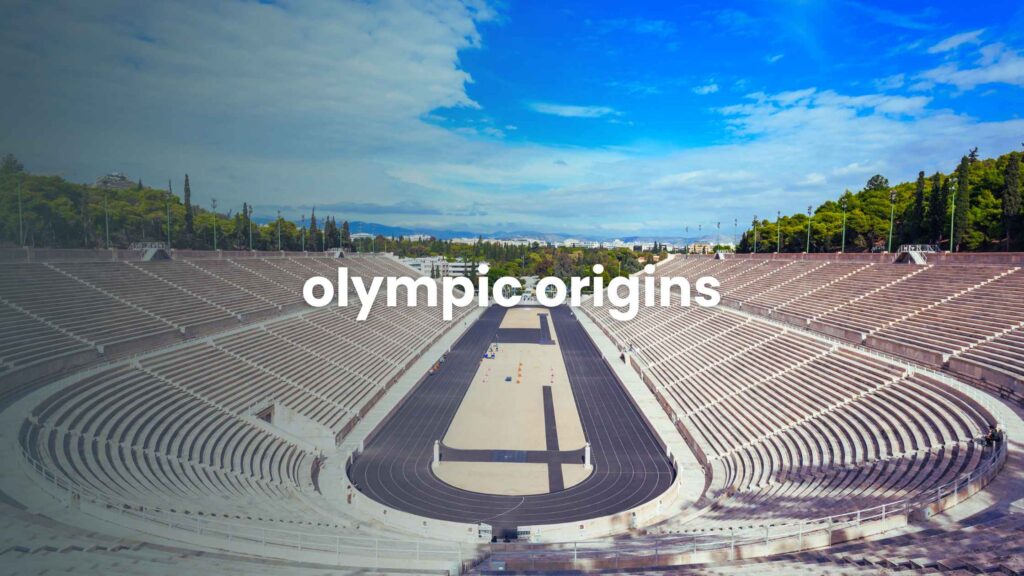
“Every flame has a story, and some stories are older than you think.”
When most of us think of the Olympic Games, visions of athletes sprinting across tracks, swimmers cutting through shimmering pools, or gymnasts defying gravity instantly come to mind. Yet, few pause to consider where this global celebration of sport actually began—and the surprising twists in its early history that most people have never heard.
“Games, gods, and glory.”
The first Olympic Games date back to ancient Greece, around 776 BC, in the small town of Olympia. They weren’t just about sport—they were a religious festival honoring Zeus, king of the Greek gods. Competitions included running, wrestling, and chariot racing, and they were considered so sacred that a truce was declared among warring city-states so athletes could safely travel to compete. Unlike today’s media frenzy and sponsorship deals, the ancient games were a mix of devotion, pride, and local rivalry.
“Victory was a wreath, not a medal.”
Winners didn’t receive gold, silver, or bronze. Instead, they were crowned with an olive wreath, a humble yet deeply symbolic prize. Victory brought prestige, poetry written in their honor, and sometimes even political leverage. Historians believe that in a world without modern media, the fame of an Olympic champion could spread farther than a city-state’s borders purely through word of mouth and storytelling.
“The Olympics almost died out.”
Surprisingly, the games didn’t continue uninterrupted. After centuries, they were banned by Roman Emperor Theodosius I in 393 AD, who saw them as a pagan practice incompatible with Christianity. It would take more than 1,500 years for the Olympic flame to be rekindled in a modern sense, thanks to Frenchman Pierre de Coubertin in 1896. His vision? To foster international unity through sport, blending competition with education and cultural exchange.
“More than athletics: a global experiment.”
Modern Olympics have grown into a spectacle of unparalleled scale, but their essence remains tied to humanity’s desire to celebrate excellence, endurance, and fair play. From humble olive wreaths to gold medals, from a small Greek festival to a global gathering of nations, the Olympics remind us that behind every jump, sprint, or dive is a story stretching back millennia—a story of ambition, identity, and shared human experience.
“The games continue, the flame endures.”
Next time you watch the Olympics, remember that it’s more than just a competition. Each event connects us to history, to rituals, to ancient humans who ran barefoot across fields in honor of their gods. The Olympic flame isn’t just a torch—it’s a bridge across time, a reminder that our fascination with excellence is both modern and ancient.