
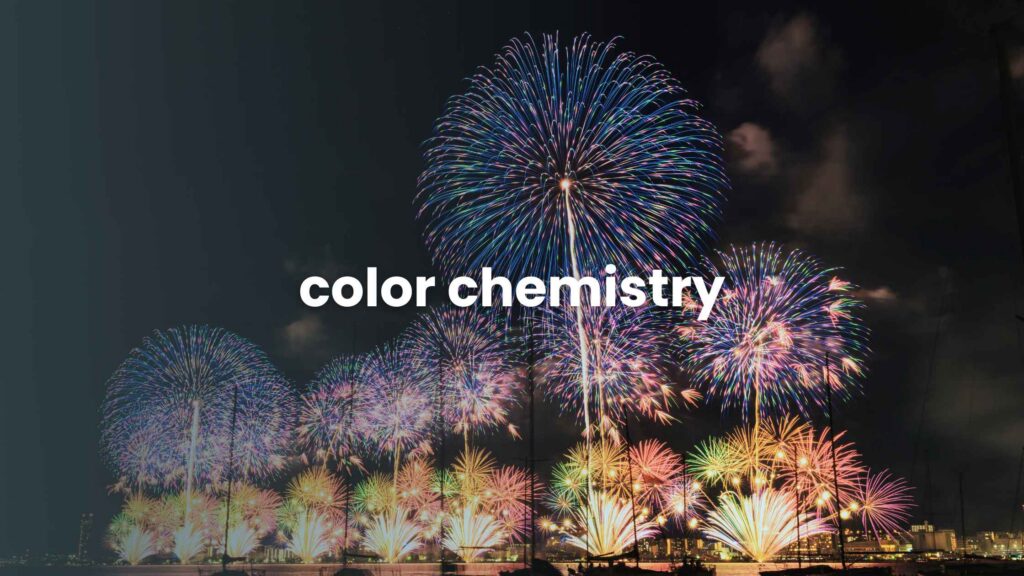
“It looks like magic. It’s actually chemistry throwing a party.”
Every year, we stand outside in the cold or heat, necks tilted back, pretending we totally understand what’s happening in the sky.
Boom.
Red.
Green.
Gold glitter raining down like the universe just hit the sparkle filter.
Someone inevitably says, “Wow, how do they even make those colors?”
And someone else confidently answers, “Uh… science.”
Very helpful.
The truth is that fireworks are less about explosions and more about chemistry class. The loud bang gets your attention. The colors are carefully engineered reactions happening in milliseconds.
Behind every pretty burst is a tiny, controlled lab experiment flying through the air.
Let’s peek inside.
How fireworks actually work
“Explosions with a plan”
At their core, fireworks are surprisingly simple.
Most shells contain four main parts: fuel, an oxidizer, metal salts for color, and a fuse to start the show.
When lit, the fuel burns while the oxidizer supplies oxygen. This creates intense heat and pressure, launching the shell upward. A second charge explodes at the top and spreads tiny pellets called stars.
Those stars are what paint the sky.
Each one burns in a specific color depending on what elements are inside.
So that giant red bloom?
Basically dozens of tiny burning chemistry pellets.
Science has never looked so dramatic.
Red comes from strontium
“Romantic sunsets, courtesy of metal”
That deep red you see during fireworks shows is often created with strontium salts.
When heated, strontium atoms absorb energy and release it as red light.
It’s the same principle scientists use to study stars and identify elements in space.
Spectroscopy shows that every element gives off its own light signature, like a fingerprint.
So fireworks designers borrow a trick from astronomy.
Which means your backyard celebration shares physics with the sun.
Kind of cool, right?
Blue is surprisingly difficult
“The diva of firework colors”
Blue fireworks are beautiful.
They’re also notoriously hard to make.
Copper compounds create blue light, but only at very specific temperatures. Too hot and the color washes out. Too cool and it looks dull or greenish.
It’s the Goldilocks color.
Firework chemists often say blue is the most stubborn shade to perfect.
So next time you see a crisp blue burst, appreciate it.
Someone spent years tweaking that formula so it didn’t look like sad turquoise.
Science can be dramatic too.
Green glows because of barium
“Toxic element, pretty result”
Bright green fireworks usually come from barium compounds.
When burned, barium produces a vivid green glow that’s hard to miss.
It’s funny how many beautiful colors come from elements that sound like they belong in a lab safety manual.
Don’t worry though. In fireworks, these materials are used in controlled, tiny amounts and burn quickly.
Still, it’s wild to think the prettiest part of the show involves something that sounds like it should come with warning labels.
Nature has a weird sense of aesthetics.
Gold and silver aren’t really colors
“Sparkle is physics, not paint”
Those golden waterfalls and silver showers?
They’re less about color and more about light behavior.
Metals like iron, aluminum, or titanium create sparks when heated. The size of the particles determines how long they glow.
Big chunks produce slow, trailing sparkles. Tiny particles flash quickly.
So those dramatic golden “rain” effects are basically glowing metal dust.
Which sounds far less magical.
But also slightly badass.
Why some fireworks crackle or whistle
“Sound has its own recipe”
Color gets the spotlight, but sound is engineered too.
Crackling effects often come from small compositions that rapidly pop as they burn. Think tiny bursts happening inside the air.
Whistles happen when gases escape through narrow openings, creating vibration, similar to blowing across a bottle.
It’s all controlled chaos.
Designers aren’t just painters. They’re composers.
Each show is half chemistry, half music.
The sky becomes a laboratory
“Every burst is a science experiment”
Researchers studying combustion and light emission often use similar principles to what firework makers use.
The colors come from electrons jumping between energy levels and releasing light. This same concept explains neon signs, streetlights, and even how scientists analyze distant galaxies.
Which means fireworks aren’t just entertainment.
They’re applied physics with a bit of flair.
You could technically call them educational.
Though shouting “Look at the electron transitions!” during a show might lose you some friends.
From ancient China to modern chemistry
“Accidentally invented fun”
Fireworks started with simple black powder in ancient China over a thousand years ago.
The original goal wasn’t pretty colors. It was noise to scare away evil spirits.
The colorful chemistry came much later as scientists learned how elements burn.
So what began as spiritual protection turned into sky art.
Human progress in one sentence.
We went from “boom scares ghosts” to “let’s optimize copper chloride for better saturation.”
More than just pretty explosions
When you watch fireworks now, you might see them differently.
Not just bursts of light.
But tiny reactions, atoms dancing, energy turning into color for a fraction of a second.
It’s science, engineering, and art squeezed into one loud, glowing moment.
And somehow that makes it even better.
Because magic is nice.
But knowing how something works and still finding it beautiful?
That’s cooler.
A brighter way to look at the night sky
Next time you’re standing outside at a celebration, take a second before the first boom.
Think about it.
Hundreds of years of chemistry, physics, and experimentation all leading to this one colorful explosion above your head.
Then just enjoy it like a kid again.
Because sometimes the smartest thing you can do with science is simply say, “Whoa.”
And watch the sky light up.