
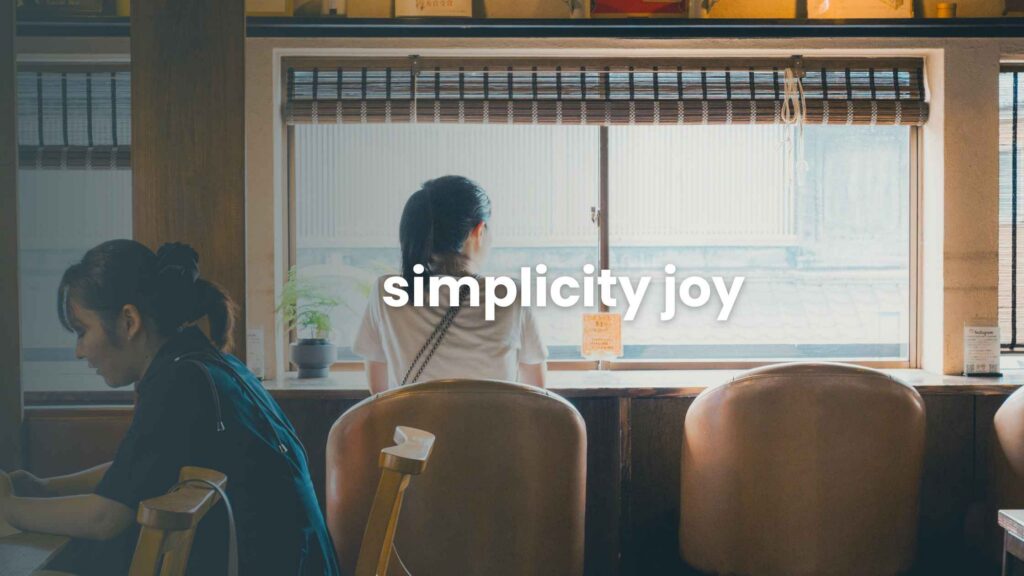
In a world obsessed with hustle, materialism, and constant notifications, Japan offers a refreshingly different philosophy: simplicity as a path to joy. Rooted in centuries-old cultural traditions, this ethos continues to inspire people worldwide. Let’s explore how Japanese wisdom can teach us to find genuine contentment in less, not more.
“Less is More: The Art of Decluttering”
One of the most recognizable aspects of Japanese simplicity is the practice of decluttering, epitomized by Marie Kondo’s globally popular KonMari method. The principle is simple—keep only those items that spark joy and let go of the rest with gratitude.
But this idea isn’t just about tidy closets; it’s about clearing mental clutter too. Researchers have found that excessive possessions can lead to stress and anxiety. In contrast, minimalist environments can promote calmness and focus (Smith & Leung, 2021).
Try This: Start by decluttering one drawer. Ask yourself: Does this bring me joy? If not, thank it for its service and let it go.
“Wabi-Sabi: Finding Beauty in Imperfection”
While perfectionism often dominates Western ideals, Japan embraces a philosophy called wabi-sabi. This ancient concept teaches us to appreciate the beauty of imperfection, impermanence, and the natural cycle of growth and decay.
A cracked ceramic bowl, instead of being discarded, might be repaired with golden lacquer through the art of kintsugi, making it even more beautiful. This serves as a reminder that flaws and scars add to our uniqueness.
In Practice: Embrace your imperfections, whether it’s a scar, a mistake, or an old piece of furniture. These are part of your story.
“Ikigai: The Joy of Purpose”
Ikigai (pronounced ee-kee-guy) translates to “a reason for being.” It’s a powerful concept that combines what you love, what you are good at, what the world needs, and what you can be paid for.
Unlike the Western pursuit of happiness, which often focuses on external achievements, ikigai encourages a balanced and meaningful life rooted in daily purpose. Studies have shown that people with a strong sense of purpose tend to live longer and healthier lives (National Institute on Aging, 2020).
Reflection: Ask yourself: What makes you excited to get up in the morning? How can you bring more of that into your life?
“Zen Gardens and Mindful Spaces”
The serene beauty of a Japanese zen garden isn’t accidental. Every stone, plant, and pathway is meticulously placed to encourage mindfulness and tranquility.
Research shows that spending time in natural and thoughtfully curated spaces can reduce stress and improve mental health (Greenwood & Myerson, 2022). Even if you don’t have a garden, creating a small mindful corner in your home can make a significant difference.
Quick Tip: Create a minimalist corner in your home with just a plant, a cushion, and a candle. Use this space for quiet reflection or meditation.
“The Joy of Simple Rituals”
From the meticulous preparation of matcha tea to the seasonal enjoyment of cherry blossoms (hanami), Japanese culture celebrates everyday rituals. These rituals encourage us to slow down and savor life’s simple pleasures.
Western science supports this approach. Engaging in mindful rituals can reduce stress, enhance mood, and boost overall well-being (Harvard Medical School, 2021).
Actionable Idea: Create a daily ritual, whether it’s brewing your morning coffee with intention or journaling for five minutes before bed.
“Living with Nature: The Satoyama Concept”
Japan’s satoyama philosophy emphasizes living in harmony with nature. This involves sustainable agricultural practices, conserving natural resources, and fostering biodiversity.
With urban living becoming the norm worldwide, reconnecting with nature has become more critical than ever. Even small acts like growing herbs on your windowsill or taking a walk in the park can cultivate this connection.
Final Thoughts
Japan’s approach to simplicity is not just about minimalism—it’s about living intentionally and finding joy in the present moment. By embracing concepts like wabi-sabi, ikigai, and mindful rituals, we can create a life that is both meaningful and serene.