
“Nature is not weird. We just haven’t been properly introduced yet.”
If aliens ever visited Earth and decided to study wildlife, they would probably leave thinking, “These creatures cannot be real.”
Because honestly, if someone told you that a moth drinks bird tears, ants farm livestock, or fish change gender midlife, you would assume they just finished watching a sci-fi movie.
But no. This is biology. This is documented. And yes, it gets stranger.
Let’s take a walk through the wonderfully bizarre side of nature.
Fair warning. After this, squirrels may never look normal again.
The moth that drinks tears
“When nectar isn’t enough, improvise”
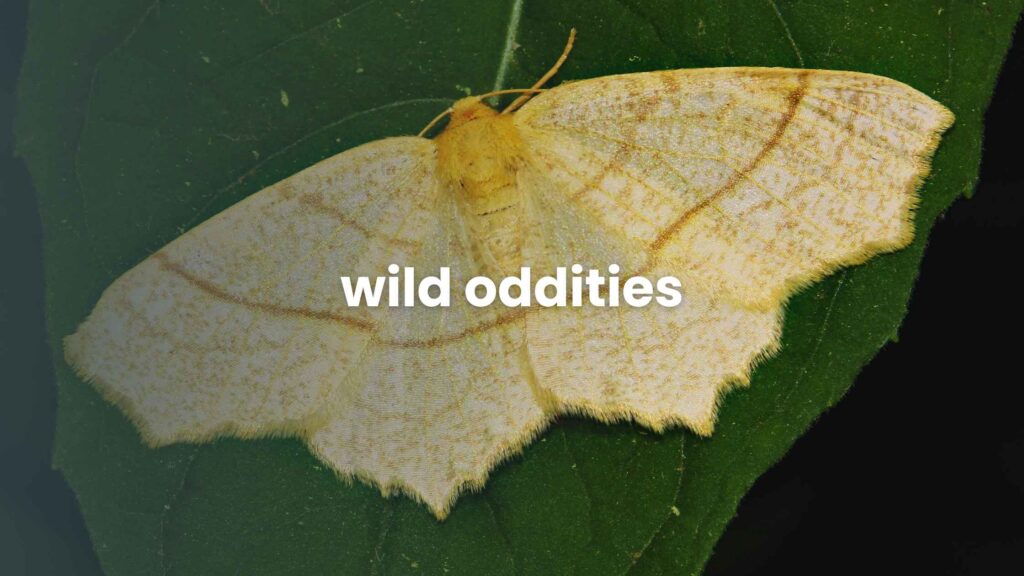
Deep in Madagascar’s forests, scientists observed something that sounds like a prank.
A moth quietly lands on a sleeping bird. Not to bite. Not to attack.
To cry with it.
More specifically, to drink its tears.
This behavior is called lachryphagy, which literally means tear feeding. Researchers have recorded moths gently inserting their long proboscis near the bird’s eye to sip the salty liquid.
Why tears?
Salt and minerals.
In tropical environments, sodium can be hard to find. Tears are basically a tiny electrolyte drink.
The wild part is the birds often sleep through it. The moth is surprisingly gentle, like a very weird nighttime nurse.
Scientists from conservation groups working in Madagascar have documented and photographed this behavior multiple times, confirming it’s not a one-off fluke.
Still, imagine explaining that job title.
“What do you do?”
“Oh, I collect tears from birds at night.”
Ants that farm cows (well… almost)
“Tiny ranchers with six legs”
You might think agriculture is humanity’s proud invention.
Ants would like a word.
Certain ant species actually farm aphids. They protect them from predators, move them to fresh plants, and even build shelters for them.
Why?
Because aphids produce a sugary liquid called honeydew.
Ants literally “milk” them by tapping their bodies with their antennae, prompting the aphids to release droplets.
It’s basically insect dairy farming.
Researchers in entomology have compared this relationship to domestication because the ants actively manage and guard their aphid herds.
Some ants even carry aphid eggs into their nests during winter, like a farmer storing livestock for next season.
Next time you feel productive, remember that ants invented farming millions of years before we figured out bread.
Fish that change gender halfway through life
“Today male. Tomorrow female. Biology shrugs.”
Clownfish, wrasses, and several reef species casually do something humans still debate endlessly.
They change sex.
No drama. No paperwork. Just hormones and timing.
In clownfish communities, the largest fish is female and leads the group. If she dies, the dominant male literally transforms into a female and takes her place. Another male moves up the ladder.
This process, called sequential hermaphroditism, is backed by decades of marine biology research. Hormones shift, reproductive organs change, behavior adapts.
Nature treats it like switching job roles.
Meanwhile, humans can’t even agree on group projects.
Octopuses that punch fish
“Cooperation has limits”
Octopuses sometimes hunt alongside fish. It’s a clever partnership. The fish flush prey out of hiding while the octopus grabs whatever escapes.
Teamwork. Beautiful.
Except sometimes the octopus randomly punches the fish.
For no food.
No threat.
Just… punch.
Underwater researchers studying reef behavior recorded octopuses striking partner fish, possibly to keep them in line or reduce freeloading.
Basically, the octopus invented workplace management.
“Contribute or get smacked.”
Honestly, relatable.
Birds that decorate to impress dates
“Interior design, but make it romantic”
Male bowerbirds don’t just sing to attract mates.
They become artists.
They build elaborate structures called bowers and decorate them with color themes. Blue berries, shiny beetle wings, bits of glass, flowers, shells.
Some even arrange objects by size to create optical illusions that make their display look bigger.
Scientists studying sexual selection say females judge both creativity and organization.
So yes, somewhere in the forest is a bird stressing about aesthetics like:
“This pebble doesn’t match the vibe.”
Pinterest, but feathers.
Rats that laugh when tickled
“Happiness has a sound you can’t hear”
Here’s something oddly comforting.
Rats laugh.
Not audibly to us, but in ultrasonic squeaks.
Laboratory studies in behavioral neuroscience found that rats emit high-frequency chirps when playing or being tickled. The same sounds appear when they anticipate fun experiences.
Even cuter, they will chase the researcher’s hand asking for more tickles.
If that doesn’t soften your opinion of rats, nothing will.
Turns out joy isn’t uniquely human. It’s just sometimes pitched higher than our ears can handle.
So what’s the lesson here?
The deeper scientists look into nature, the stranger it becomes.
Animals farm. Decorate. Cooperate. Steal tears. Punch coworkers. Laugh.
And somehow, it all works.
Maybe the world isn’t as orderly as we pretend. Maybe it’s beautifully chaotic and ridiculously creative.
Which is honestly more fun.
Next time you think humans are weird, just remember: somewhere in Madagascar, a moth is gently sipping a sleeping bird’s tears like it’s a midnight smoothie.
Suddenly your habits feel pretty normal.