
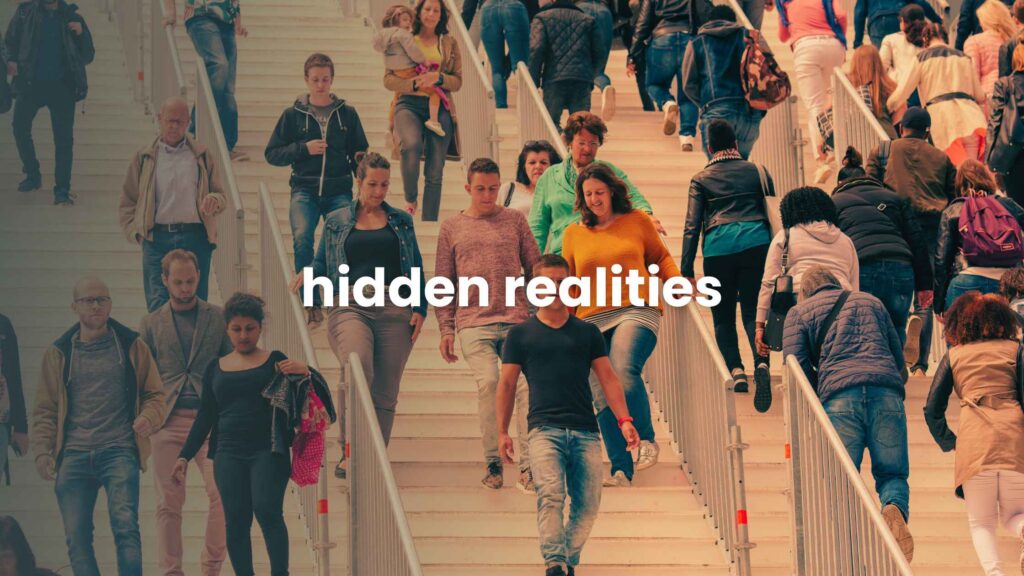
“The world feels familiar, until the numbers quietly disagree.”
We walk past thousands of people every year. On the street. At work. Online. At the airport.
Most of us assume we more or less understand what “normal” looks like.
Statistics tell a different story.
When you zoom out and look at real population data, society becomes stranger, darker, richer, sicker, and more uneven than our daily experiences suggest. Below are verified, widely cited statistics about people that tend to stop readers mid-scroll.
Not because they are sensational.
But because they are real.
1 in 2 People Will Develop Cancer at Some Point in Their Life
“Cancer is no longer rare. It is statistically ordinary.”
According to large-scale population studies referenced by organizations such as the World Health Organization and national cancer institutes, roughly 40 to 50 percent of people in high-income countries will receive a cancer diagnosis during their lifetime.
This does not mean cancer is inevitable for everyone. It does mean that cancer is no longer an outlier disease affecting “other people.” It affects coworkers, parents, friends, and future versions of ourselves.
Part of this increase is linked to longer life expectancy. Part is tied to lifestyle factors, environmental exposure, and improved detection methods. More screening means more diagnoses, which changes the numbers but not the reality of impact.
Cancer has quietly shifted from rare tragedy to shared human experience.
1 in 65 Adults Is a Millionaire
“Wealth is more common than it looks, and more invisible than you think.”
Global wealth reports, including long-running studies by financial institutions such as Credit Suisse, estimate that around 1 to 2 percent of adults worldwide have a net worth exceeding one million US dollars.
In developed economies, that ratio is often closer to 1 in 20.
Most millionaires do not look like social media stereotypes. Many live in average homes, drive ordinary cars, and avoid public displays of wealth. A significant portion are older, asset-rich, and quietly invested rather than flashy spenders.
The takeaway is not admiration or resentment.
It is perspective.
Extreme wealth often hides in plain sight.
Roughly 1 in 700 People Has Killed Someone
“Violence is rarer than fear suggests, but more common than comfort allows.”
Criminology research combining conviction data, homicide clearance rates, and demographic modeling suggests that approximately 0.1 to 0.2 percent of people will directly cause another person’s death intentionally over their lifetime.
This includes cases tied to domestic violence, gang activity, military service, and other high-risk contexts.
The number is lower than our true-crime-saturated brains expect.
It is higher than our moral instincts prefer.
Most people will never commit violent acts. But violence is not limited to monsters or strangers. It often happens within familiar social circles, under stress, fear, or perceived threat.
That is what makes it unsettling.
Around 1 in 200 People Struggles With Severe Substance Addiction
“Addiction is not rare. It is just quiet.”
Epidemiological studies from public health agencies suggest that about 0.5 percent of adults live with severe substance use disorders at any given time. Broader definitions that include alcohol use disorder push that number significantly higher.
Addiction does not announce itself. Many people maintain jobs, relationships, and routines while privately fighting dependence. Others never receive a diagnosis at all.
The stereotype of visible collapse is misleading. Addiction often looks like normal life held together with effort.
Statistics remind us that recovery stories are not exceptions.
They are necessities.
About 1 in 5 People Will Experience a Mental Health Disorder This Year
“Mental health struggles are statistically ordinary, not exceptional.”
Large-scale surveys conducted by organizations such as the CDC and WHO consistently show that roughly 20 percent of adults experience a diagnosable mental health condition in any given year.
Anxiety disorders and depression are the most common. Many cases go untreated, not because they are mild, but because stigma remains stubbornly effective.
If five people are sitting at a table, one of them is likely struggling right now.
Possibly silently. Possibly smiling.
That realization changes how you listen.
Less Than 30 Percent of People Feel Truly Engaged at Work
“Most people are not lazy. They are disconnected.”
Global workplace studies repeatedly find that the majority of employees feel disengaged from their jobs. Engagement levels often hover between 20 and 30 percent.
Disengagement is not about effort. It is about meaning, autonomy, and psychological safety. People show up physically while mentally elsewhere.
This statistic explains burnout, quiet quitting, and the growing desire for purpose-driven work. It also explains why so many conversations start with, “I don’t hate my job, but…”
Work occupies most of adult life.
That makes disengagement expensive, personally and socially.
Around 1 in 10 People Lives With Chronic Loneliness
“Being surrounded is not the same as being connected.”
Social science research increasingly treats loneliness as a public health concern. Estimates suggest 10 to 15 percent of adults experience persistent loneliness, even when socially active.
Loneliness correlates with increased risks of depression, cardiovascular disease, and early mortality. It is not simply about isolation. It is about the absence of meaningful connection.
In crowded cities and hyperconnected digital spaces, loneliness thrives quietly.
Numbers reveal what silence hides.
Why These Numbers Matter More Than Shock Value
“Statistics are mirrors, not weapons.”
These facts are not meant to frighten or impress. They exist to recalibrate perception.
When you understand how common illness, wealth, struggle, violence, and loneliness actually are, judgment softens. Empathy becomes more rational. Curiosity replaces assumption.
Society does not consist of extremes.
It consists of probabilities playing out across millions of lives.
Once you see that, you stop seeing people as anomalies and start seeing them as data points with stories.
And stories deserve care.