
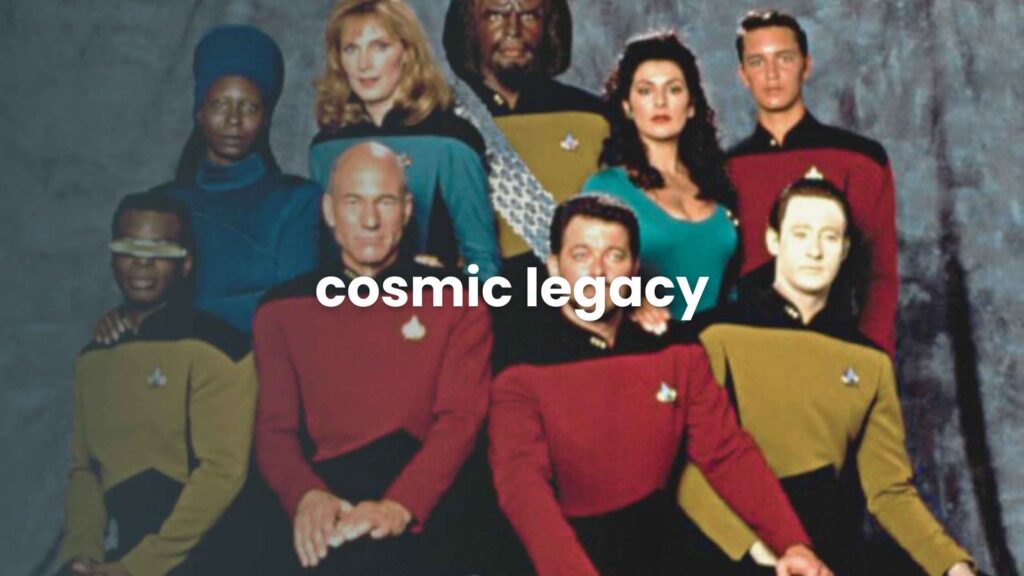
“Space wasn’t the only thing they explored. They quietly explored us, too.”
Even if you’ve never watched a full episode of Star Trek, you probably recognize something from it.
The hand sign.
The uniforms.
“Beam me up.”
That calm voice saying, “Space, the final frontier.”
It feels like just another sci fi franchise. Spaceships, aliens, lasers, the usual.
But here’s the funny part.
Star Trek wasn’t just predicting the future. It was secretly reshaping it.
Behind the rubber masks and cardboard sets of the 1960s was a show doing something bold, sometimes rebellious, and occasionally way ahead of science itself.
Some of its biggest impacts happened so quietly that most viewers never noticed.
Let’s open the airlock.
“The kiss that shocked television”
The moment TV accidentally made history
In 1968, American television still avoided showing interracial couples. Networks were cautious. Sponsors were nervous.
Then Star Trek aired an episode where Captain Kirk and Lieutenant Uhura kissed on screen.
A white man and a Black woman.
Today that sounds normal. Back then, it was controversial enough to make executives sweat.
Cultural historians often point to this scene as one of the earliest examples of mainstream television challenging racial boundaries. Research into media influence suggests that seeing diverse relationships on screen reduces prejudice and increases empathy over time.
So while viewers thought they were watching aliens and mind control, they were also watching a quiet social revolution.
All hidden inside a space drama.
Not bad for a show with foam rocks.
“Your smartphone owes this show a thank you”
The flip phone inspiration
Remember those old flip phones? The ones you snapped open like a secret agent?
Engineers have openly said the design was inspired by the communicators in Star Trek.
Yes. The future gadget from a 1960s TV show helped shape real technology.
And it didn’t stop there.
Tablet computers, voice assistants, video calls, even automatic doors were shown decades before they became normal life.
There’s actually research in innovation psychology showing that science fiction can guide inventors by giving them visual goals to work toward.
In other words, sometimes engineers build what they first see on TV.
So technically, binge watching might be research.
You’re welcome.
“The most diverse crew on television”
Representation before it was trendy
Look closely at the original bridge crew.
A Russian officer during the Cold War.
A Japanese helmsman not long after World War II.
A Black communications officer in a position of authority.
An alien science officer.
In the 1960s, this was radical.
Creator Gene Roddenberry believed the future should look united, not divided.
Sociologists studying workplace representation often note that seeing diversity in leadership roles increases young viewers’ confidence about their own potential.
For many kids watching at home, this wasn’t just fiction.
It was permission to dream bigger.
Also, let’s be honest, Spock made being logical look very cool.
Half the audience probably tried the eyebrow raise in the mirror.
“The transporter wasn’t creative. It was cheap”
Budget problems created an icon
Here’s a secret that makes me laugh.
The transporter, one of the most famous elements of the show, wasn’t invented because it was cool.
It was invented because they couldn’t afford landing scenes.
Filming the ship landing on planets every episode would have blown the budget. So the writers basically said, what if they just… disappear?
Problem solved.
Special effects sparkle. Done.
Production studies often show that creative limits actually boost innovation. When you can’t do everything, you invent something smarter.
So one of sci fi’s most legendary technologies exists because someone looked at the budget and said, absolutely not.
Art through financial panic.
Relatable.
“NASA loved Star Trek too”
Fiction motivating real astronauts
This one is wild.
Several real astronauts have said they chose their careers partly because of Star Trek.
NASA even named one of its early space shuttles Enterprise after the show’s starship following a fan campaign.
Psychologists call this the inspiration effect. Stories can shape career paths by making possibilities feel personal and reachable.
So somewhere out there, someone literally went to space because of a TV marathon.
Imagine telling that to your parents.
“I’m not wasting time watching sci fi. I’m planning my future.”
Turns out they were right.
“It survived cancellation because fans refused to quit”
The original fan rebellion
Before social media, saving a show was nearly impossible.
But when Star Trek faced cancellation in the 1960s, fans organized one of the first massive letter writing campaigns in TV history.
Thousands of physical letters flooded the network.
Actual envelopes. Stamps. Effort.
Media scholars often cite this as one of the earliest examples of organized fandom influencing corporate decisions.
Basically, the first version of “renew this show or else” happened with pens and paper.
And it worked.
That’s dedication.
Or mild obsession.
Probably both.
More than just spaceships
Here’s what makes all of this special.
On the surface, Star Trek looks like simple entertainment.
Phasers. Aliens. Dramatic music.
But underneath, it quietly pushed society forward.
Technology. Equality. Optimism. Curiosity.
It asked a big question without shouting it.
What if humanity actually got better?
Not darker. Not crueler.
Better.
That hopeful tone is rare even today.
And maybe that’s the real secret.
Not the gadgets.
Not the battles.
The belief that the future could be kind.
The legacy that still travels at warp speed
Long after the sets aged and the effects look charmingly retro, the ideas still matter.
Every time you video call a friend, talk to a voice assistant, or see diverse heroes on screen, you’re seeing echoes of something that started on a low budget TV show with big dreams.
Turns out the final frontier wasn’t space at all.
It was imagination.
And we’re still exploring it.