
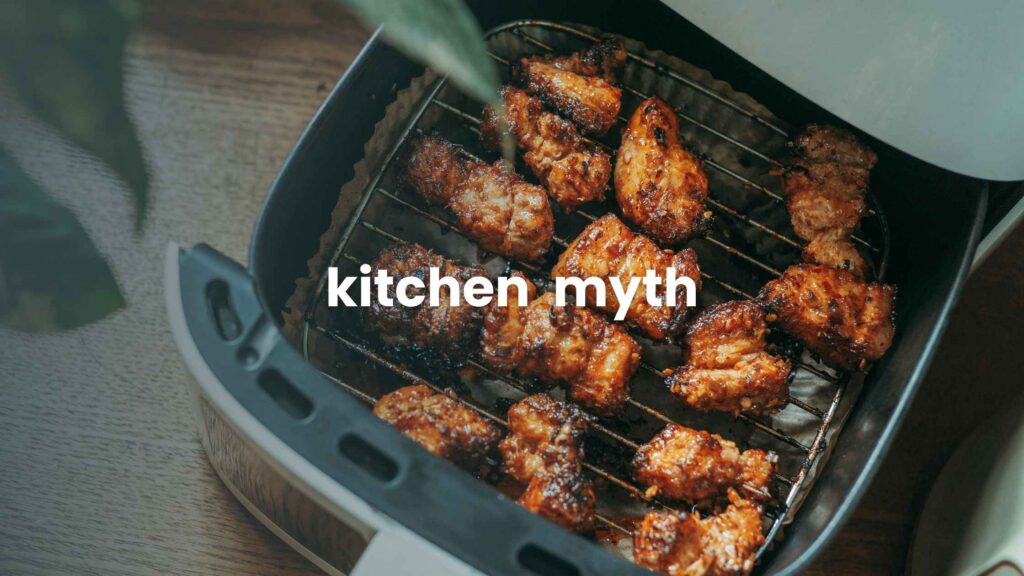
A few years ago, the air fryer quietly entered kitchens. Then it exploded. Suddenly, fries were guilt free, chicken wings were virtuous, and entire TikTok accounts revolved around pushing a drawer in and out.
But behind the glossy marketing and the promise of crispy food without regret sits a simple question.
Is the air fryer truly healthier, or did it just win the branding Olympics?
“Health sells better when it crackles.”
Why the air fryer feels like a wellness revolution
The appeal is obvious. No deep fryer. No bubbling oil. No lingering smell that reminds you of questionable late night decisions.
Air fryers cook by circulating hot air rapidly around food, producing browning similar to frying. This creates the perception of frying without the frying. And perception matters more than we like to admit.
From a psychological standpoint, food that looks indulgent but feels virtuous activates what researchers call moral licensing. When we believe we made a healthy choice, we often eat more of it. Yes, even if it is still fries.
What the science actually says about fat and calories
Let us start with the clearest claim.
Air frying reduces fat content.
That part is mostly true.
Studies comparing deep fried foods to air fried versions show fat reductions ranging from 70 to 90 percent, depending on the food and preparation method. Less oil means fewer calories. That matters.
Here is a simplified comparison:
| Cooking method | Typical oil used | Average fat content |
|---|---|---|
| Deep frying | High immersion | Very high |
| Pan frying | Moderate | Medium |
| Air frying | Minimal or none | Low |
So yes, in terms of fat intake, the air fryer usually wins.
But health is not a one nutrient contest.
The overlooked issue: chemical byproducts
This is where marketing tends to get quiet.
High heat cooking methods, including air frying, roasting, and baking, can produce compounds like acrylamide. Acrylamide forms when starchy foods such as potatoes are cooked at high temperatures.
Research published in food science journals suggests that air frying can reduce acrylamide compared to deep frying, but not eliminate it. In some cases, levels are similar to oven baking.
So the air fryer is not magically neutral. It simply shifts risk profiles.
“Less oil does not mean zero consequences.”
Nutrient retention: not as simple as it sounds
Another common claim is that air frying preserves nutrients better.
The truth is mixed.
Water soluble vitamins like vitamin C are sensitive to heat regardless of method. Fat soluble vitamins can actually become more bioavailable with some oil present.
Ironically, removing all oil is not always nutritionally optimal. A drizzle of healthy fat can improve absorption of certain nutrients.
So while air frying may protect some compounds better than deep frying, it is not automatically superior to steaming, boiling, or gentle sautéing.
The real health factor nobody markets
Here is the uncomfortable part.
The air fryer does not decide what you eat. You do.
Air frying broccoli is very different from air frying mozzarella sticks. Yet both get the same health halo.
Research on dietary patterns consistently shows that overall food quality matters more than cooking method. Vegetables remain vegetables. Ultra processed foods remain ultra processed, even if crisped by hot air.
Marketing blurs this distinction beautifully.
“A healthier method does not turn junk into nourishment.”
Portion sizes and the illusion of virtue
Because air fried food feels lighter, people often eat more of it.
Behavioral nutrition studies show that when people perceive food as healthier, they increase portion size without realizing it. This effect has been observed with low fat labels, organic branding, and now air frying.
In other words, the health benefit can disappear quietly while you reach for another batch.
When the air fryer genuinely helps
To be fair, the air fryer can be a powerful tool.
It helps people:
- Cook more at home instead of ordering fast food
- Reduce oil without sacrificing texture
- Prepare vegetables in more appealing ways
- Save time, which lowers reliance on convenience meals
These indirect effects matter more than the appliance itself.
If the air fryer nudges someone toward home cooking and experimentation with whole foods, that is a real win.
When it becomes a marketing illusion
The problem arises when the air fryer becomes a moral shield.
Using it does not cancel out poor food choices. It does not undo sugar, refined carbs, or excessive salt. And it certainly does not replace balanced eating.
Health is cumulative. No appliance gets to be the hero on its own.
“Tools amplify habits. They do not replace them.”
So what should we actually conclude
The air fryer is not a scam.
It is also not a miracle.
It reduces fat compared to deep frying. It offers convenience. It can support healthier habits if paired with thoughtful food choices.
But much of its health reputation comes from marketing language that simplifies complex nutritional realities.
The real benefit is not the hot air.
It is what you choose to put into it.