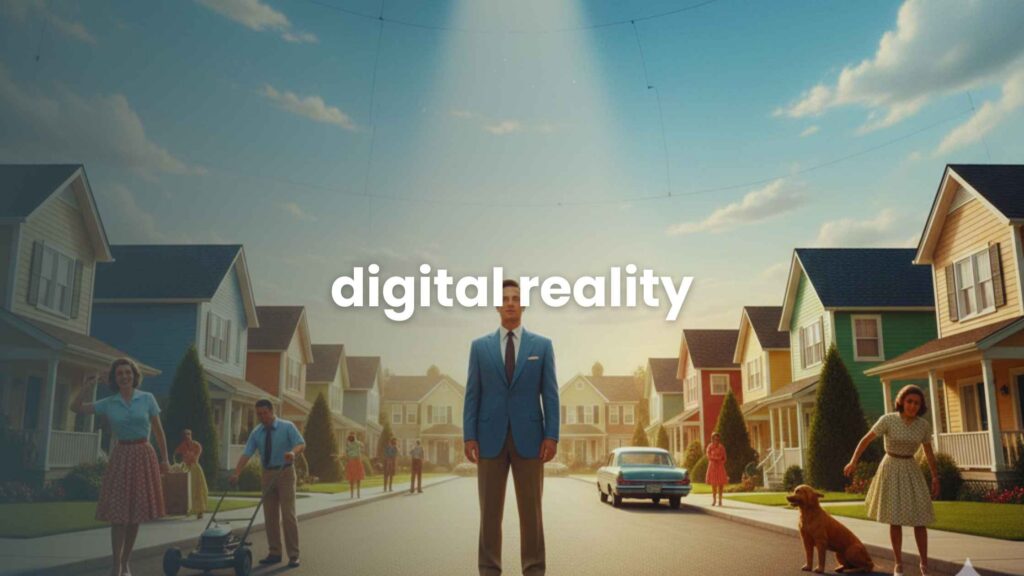
“It was never just a movie. It was a warning.”
When The Truman Show premiered in 1998, it felt surreal. A man unknowingly living inside a television set. Cameras everywhere. An audience watching his every move. At the time, it seemed exaggerated, even absurd.
Today, it feels uncomfortably familiar.
What once looked like science fiction now reads like a user manual for modern life online.
Living on a Stage Without Realizing It
“The performance starts before you wake up.”
Truman Burbank wakes up smiling, says good morning to his neighbors, and performs daily routines for an invisible audience. Sound familiar?
Psychologists studying social media behavior note that many users subconsciously curate their lives as if they are being watched. According to research published in the Journal of Social and Clinical Psychology, people adjust behavior when they feel observed, even if the audience is abstract.
Likes replaced applause. Stories replaced scenes.
The stage just became digital.
Authenticity vs Approval
“Be yourself, but make it likable.”
Truman’s world rewards him when he behaves predictably. When he starts questioning reality, the system pushes back. This mirrors how social platforms reward conformity and punish deviation through visibility algorithms.
Studies on platform behavior show that content aligning with trends receives more reach, while authenticity that disrupts expectations often gets buried. Over time, users learn what performs well and unconsciously adapt.
You are free to be yourself. As long as yourself performs.
Surveillance Became Voluntary
“No hidden cameras required.”
In the film, Truman is watched without consent. In modern life, people willingly broadcast their location, habits, meals, and thoughts.
Research from digital ethics scholars highlights a shift from forced surveillance to participatory surveillance. People document themselves not because they must, but because visibility feels validating.
The twist is subtle. The cage has an open door, and people decorate it.
The Fear of Stepping Outside the Script
“What if the world ends at the edge of town?”
Truman is terrified of the unknown, especially the ocean. His fears are carefully planted to keep him from leaving. Today, fear takes different forms. Fear of losing relevance. Fear of missing out. Fear of silence.
Mental health studies link heavy social media use to increased anxiety around social validation. When identity is tied to visibility, stepping away feels risky.
The unknown is not outside the town anymore. It is logging off.
Manufactured Reality Feels Real Enough
“If everyone agrees, it must be true.”
Truman’s reality works because everyone around him reinforces it. On social media, consensus is often algorithmically manufactured. Repeated narratives feel true, regardless of nuance.
Media psychology research shows that repetition increases perceived truthfulness, a phenomenon known as the illusory truth effect. When everyone appears to agree, questioning feels unnecessary.
The script writes itself.
Truman’s Escape Is the Point
“The bravest moment happens off camera.”
The most powerful scene in the film is not Truman being watched. It is Truman leaving. Choosing uncertainty over comfort. Reality over performance.
Philosophers analyzing The Truman Show often highlight this moment as a metaphor for autonomy. Real freedom begins when external validation loses control.
Not when the audience disappears. When it no longer matters.
What the Film Got Right
“We did not become Truman. We became the producers too.”
The Truman Show predicted a world where life blends with performance, where identity becomes content, and where freedom requires conscious disengagement.
The film was not anti technology. It was pro awareness.
And maybe the most unsettling part is this. Truman did not know he was trapped. Until he did.
How The Truman Show Explained Life in the Age of Social Media