
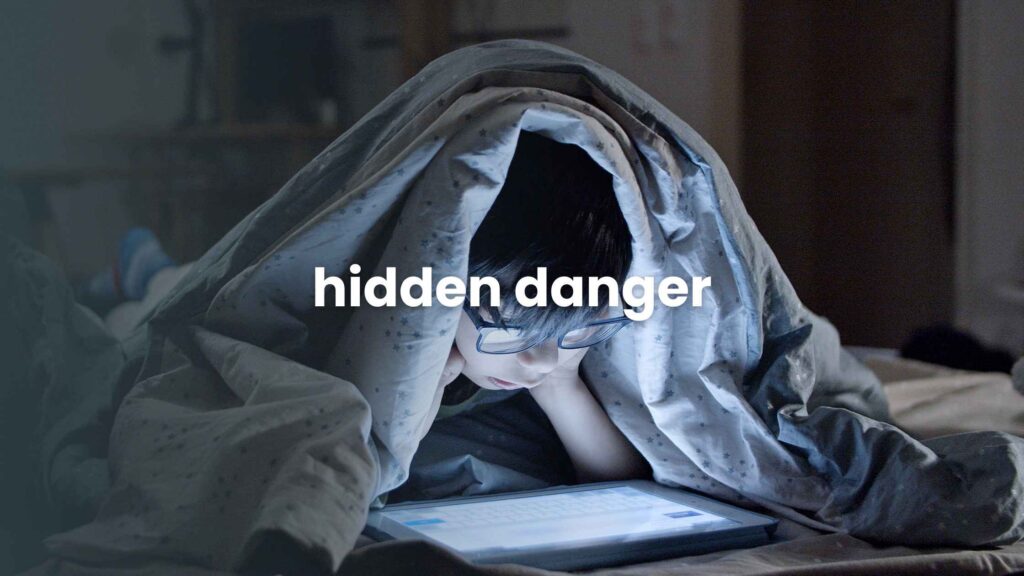
Online games were supposed to be about teamwork, imagination, and a little healthy competition. Somewhere between building digital castles and chasing high scores, something darker found its way in.
Games like Roblox, Fortnite, Minecraft, and others have become social spaces first and games second. And wherever children gather online, predators eventually follow.
“When play becomes social, risk quietly follows.”
This is not a panic driven story. It is a documented, researched, and increasingly acknowledged reality.
Why online games attract predators
Online games offer three things predators look for.
Anonymity. Access. Time.
Most popular multiplayer games allow users to create avatars, chat freely, and move between private and public spaces with minimal friction. For children, this feels like freedom. For predators, it feels like opportunity.
According to research cited by the UK National Crime Agency and Europol, gaming platforms are now among the most common online environments where initial contact between offenders and minors takes place. This does not mean games cause abuse. It means they provide access.
And access is everything.
Roblox and the scale problem
Roblox deserves special attention, not because it is uniquely dangerous, but because of its size and demographics.
The platform has over 70 million daily active users, many of them under 13. It includes open chat features, private servers, and user generated worlds. Moderation exists, but at this scale, it is imperfect.
Court records and police reports from the US, UK, and Australia show multiple cases where adults used Roblox to initiate contact that later moved to private messaging apps. These cases are documented in public legal filings and child protection reports.
“Scale does not create predators. It hides them.”
How grooming actually works online
Grooming is rarely sudden or obvious.
Studies published in the Journal of Child Sexual Abuse describe grooming as a gradual process designed to build trust, dependency, and secrecy. In gaming environments, this often starts innocently.
A player helps a child complete a task. Gives virtual items. Offers protection in a game. Becomes a regular presence.
Nothing illegal yet. Nothing alarming on its own.
Over time, conversations shift. Personal questions appear. Compliments increase. The child is encouraged to keep the friendship private.
This is not manipulation through force. It is manipulation through patience.
The numbers behind the concern
While exact figures vary by country, trends are consistent.
According to the US National Center for Missing and Exploited Children, reports of online enticement increased sharply during the past five years, with gaming platforms repeatedly referenced in reports. The UK Internet Watch Foundation has reported similar patterns, noting a rise in abuse material linked to social gaming environments.
Law enforcement agencies consistently emphasize that reported cases represent only a fraction of actual incidents. Many children never report at all.
“Silence is not absence. It is underreporting.”
Why kids do not speak up
Adults often ask why children do not just tell someone.
Psychologists studying online exploitation point to several reasons.
Children fear losing access to the game. They worry about being blamed. They feel embarrassed. Or they genuinely believe the predator is a friend.
Predators exploit developmental psychology. They understand attention, validation, and belonging matter deeply to young players.
Sometimes the scariest part is that the child does not realize anything bad is happening until much later.
The role of platforms and responsibility
Gaming companies are not blind to this issue.
Many platforms have increased moderation, added AI based chat filtering, and partnered with child safety organizations. Roblox, for example, has publicly stated investments in safety teams and reporting tools.
Still, experts agree technology alone cannot solve a human behavior problem.
Moderation struggles to keep up with scale. Automated systems miss context. And predators adapt faster than filters.
“Safety tools help, but they are not substitutes for awareness.”
What actually helps protect children
Research from child protection agencies highlights three effective layers.
First, open communication. Children who feel safe talking about online experiences report issues earlier.
Second, digital literacy. Teaching kids what healthy online behavior looks like helps them recognize when something feels off.
Third, shared responsibility. Parents, schools, platforms, and policymakers all play a role.
This is not about banning games. It is about understanding them.
A culture problem, not a tech problem
It is tempting to blame platforms alone.
But predators existed long before online games. Technology simply changed the meeting place.
The deeper issue is how slowly society adapts its protections to new social spaces. Playgrounds evolved safety rules. Schools added supervision. Digital spaces are still catching up.
“Every new space children enter needs adult responsibility to follow.”
Moving forward without fear
Online games are not enemies. For millions of kids, they are creative, social, and joyful spaces.
But pretending risk does not exist helps no one.
Awareness is not paranoia. Education is not restriction. And safety does not require fear.
It requires attention.