
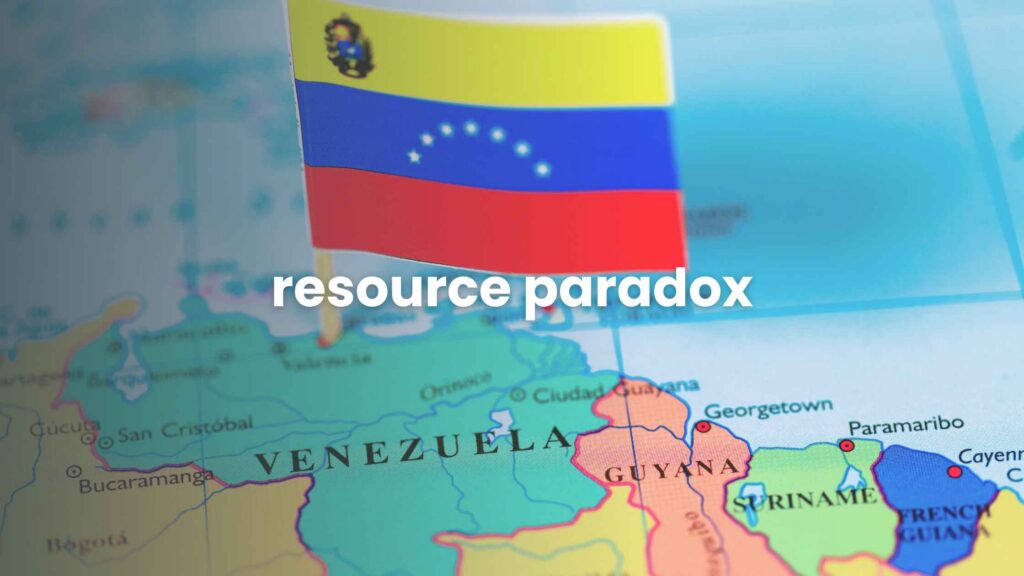
A nation that seemed impossible to fail
On paper, the country had everything going for it. Vast oil reserves. Natural gas fields stretching for miles. Minerals the global economy depends on. Fertile land and strategic trade routes. Economists once pointed to it as a case study in potential prosperity.
Yet today, its economy feels fragile. Inflation spikes quickly. Currency confidence fluctuates. Public trust erodes faster than economic indicators improve. The paradox is hard to ignore. How does a nation so rich in natural resources end up feeling economically insecure?
The answer lies less underground and more in human decisions.
“When abundance replaces urgency”
Natural wealth can feel like a shortcut. When export revenues flow easily, the pressure to diversify fades. Why invest heavily in education, innovation, or manufacturing if oil, gas, or minerals already pay the bills?
Economic research consistently shows that countries heavily dependent on natural resources often experience slower long term growth. This pattern is commonly known as the resource curse. Instead of building resilience, economies become tied to volatile global commodity prices. When prices rise, optimism soars. When they fall, instability follows.
Abundance quietly replaces planning.
Boom years hide fragile foundations
High commodity prices create a sense of safety. Governments spend more freely. Subsidies expand. Public expectations rise. Structural weaknesses remain out of sight.
Development economists note that resource booms often delay necessary reforms rather than accelerate them. Oversight weakens when money feels endless. Infrastructure projects multiply without long term strategy. Corruption risks increase, not always dramatically, but gradually and quietly.
By the time revenue declines, the cracks are already there.
“Politics follows the money”
Resource wealth tends to concentrate power. Control over extraction licenses, export contracts, and state owned enterprises becomes political leverage. Institutions designed to provide accountability often grow dependent on the same revenue streams they are meant to regulate.
Over time, policy shifts from long term planning to short term survival. Economic decisions become reactive rather than strategic. Investors hesitate. Citizens feel the instability even though the ground beneath them remains rich.
The resources stay. The confidence does not.
Why diversification proves so difficult
Diversifying an economy is harder than it sounds. Resource sectors often crowd out other industries. Strong currencies make exports less competitive. Skilled workers are drawn into high paying extraction jobs instead of technology, research, or manufacturing.
Studies on economic resilience suggest that countries with broader industrial bases recover faster from global shocks. Those tied to a narrow set of exports remain vulnerable, regardless of how valuable those exports are.
Wealth alone does not create balance.
What this teaches us about modern economies
The story is not about a lack of resources. It is about overreliance. Economic strength depends less on what a country owns and more on how it prepares for change.
Natural wealth can fund stability, but only if paired with strong institutions, diversified industries, and long term thinking. Without that balance, even the richest ground can support a fragile future.
Prosperity, it turns out, is built above ground.