
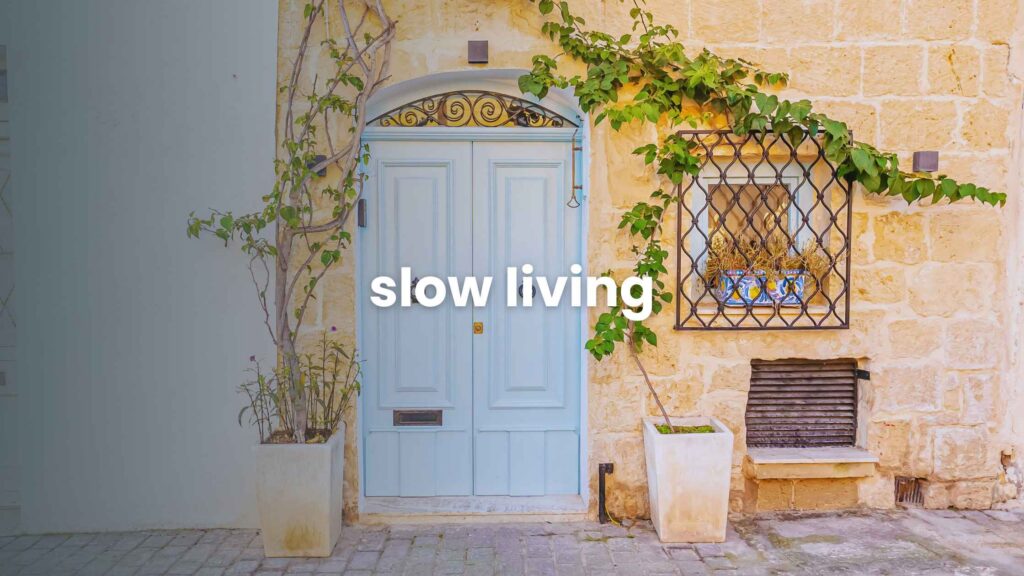
If you land in a Mediterranean town for the first time, something feels slightly off.
Not wrong. Just… slower.
The café waiter is not rushing you. The shop closes in the afternoon for reasons nobody apologizes for. People sit outside talking for hours like time is unlimited.
Your first thought might be:
How does anything get done here?
Your second thought, usually two days later, is:
Why does this feel so good?
Across countries like Italy, Spain, Greece, and parts of southern France, life is often structured around a quiet principle that many modern cities forgot.
Speed is not the goal.
Living is.
And surprisingly, research suggests this slower rhythm is not just charming. It is healthier.
“Hurry is considered bad taste”
In many Mediterranean communities, rushing through life is not admired.
It looks a little foolish.
Walking fast through a village square while eating a sandwich out of a plastic container would raise eyebrows. Sitting down for a proper meal, even on a weekday, is normal.
There is a cultural belief that some things should not be optimized.
Coffee. Conversations. Food. Even grief and celebration.
Anthropologists studying Southern European lifestyles often describe this as a time rich culture rather than a time scarce one. Time is treated as something to experience, not something to fight.
Which explains why nobody drinks espresso while jogging.
“Meals are anchors, not interruptions”
If you want to understand Mediterranean life, start with lunch.
It is rarely a sad desk snack.
It is often warm food, shared with others, sometimes lasting an hour or more.
In Spain and parts of Italy, businesses traditionally close mid afternoon. In Greece, long family lunches are common, especially on weekends.
This is not laziness. It is structure.
Meals act as daily pauses that break the day into human sized pieces.
Research in nutrition and psychology shows that slow eating improves digestion, reduces overeating, and supports better social bonding. Studies on the Mediterranean diet, frequently cited by public health organizations, also link shared meals and whole foods to lower risks of heart disease and longer life expectancy.
So that long lunch might quietly be healthcare.
Source: Research on the Mediterranean diet and longevity, including findings referenced by the World Health Organization and large cohort studies.
“Rest is built into the day”
The famous siesta has become a stereotype, but it came from a practical idea.
When temperatures rise, especially in southern regions, working through the hottest hours is inefficient and exhausting.
So people rest.
Short naps or quiet indoor time help regulate energy and reduce heat stress.
Modern sleep science actually supports this.
Short daytime naps of 15 to 30 minutes have been associated with improved alertness, memory, and mood, according to sleep researchers and institutions like the National Sleep Foundation.
In other words, grandma’s afternoon nap was not laziness.
It was biology.
Meanwhile, many of us are secretly napping at our desks with our eyes open during Zoom calls.
“Evenings belong outside”
Walk through a Mediterranean neighborhood after sunset and you will notice something beautiful.
Life moves outdoors.
Children play in the square. Elderly neighbors sit on benches. Friends gather at cafés. Families take slow walks known as the passeggiata in Italy.
Nobody seems in a rush to go home and scroll alone.
Social connection is treated like a daily vitamin.
And that matters more than we think.
Long term studies on well being, including research from Harvard’s Study of Adult Development, consistently show that strong relationships are one of the biggest predictors of happiness and longevity.
Not income. Not job titles.
Relationships.
So those nightly walks and late conversations are not just cozy traditions. They are protective factors for mental health.
Source: Longitudinal well being and relationship studies.
“Work exists, but it does not swallow everything”
Mediterranean countries are not anti work. People still work hard.
But culturally, work is one part of life, not the center of it.
Shops close on Sundays. August becomes ghostly quiet in parts of Italy and France as families take extended holidays. Emailing someone late at night often gets you a response tomorrow, not now.
Boundaries are collective.
When everyone slows down together, you do not feel guilty doing the same.
Compare that to always on cultures where taking a break feels like sneaking out of class.
There is something powerful about a society that silently agrees:
You are allowed to rest.
No explanation required.
“Pleasure is not postponed”
Perhaps the most underrated difference is this.
Mediterranean cultures do not save joy for later.
They sprinkle it everywhere.
A good tomato with olive oil. A five minute espresso standing at the bar. Music drifting from a balcony. Talking to the baker like you have nowhere else to be.
Psychologists call this everyday savoring. Studies suggest that consciously noticing small pleasures increases life satisfaction and reduces stress.
It is the opposite of the “I’ll relax when everything is done” mindset.
Because everything is never done.
There will always be another email.
There will not always be another sunset like this one.
“Slowing down is a design choice”
Here is the surprising part.
This lifestyle is not accidental. It is designed.
City centers are walkable. Public squares encourage gathering. Local markets make fresh food accessible. Public holidays are respected. Family time is protected.
The environment nudges people to slow down.
Which is smarter than relying on willpower alone.
Because let’s be honest. If your only break is a vending machine and fluorescent lighting, you are not choosing relaxation.
You are surviving.
What we can borrow from the Mediterranean mindset
You do not have to move to a coastal village and start growing olives.
But you can steal the principles.
Treat meals as moments, not tasks.
Build small breaks into your day.
Protect evenings for people, not screens.
Walk more. Sit outside. Talk longer.
And maybe stop apologizing for not being busy every second.
Because maybe the goal was never to squeeze more into life.
Maybe the goal is to actually feel it.
Sometimes slowing down is not falling behind.
It is finally catching up with yourself.