
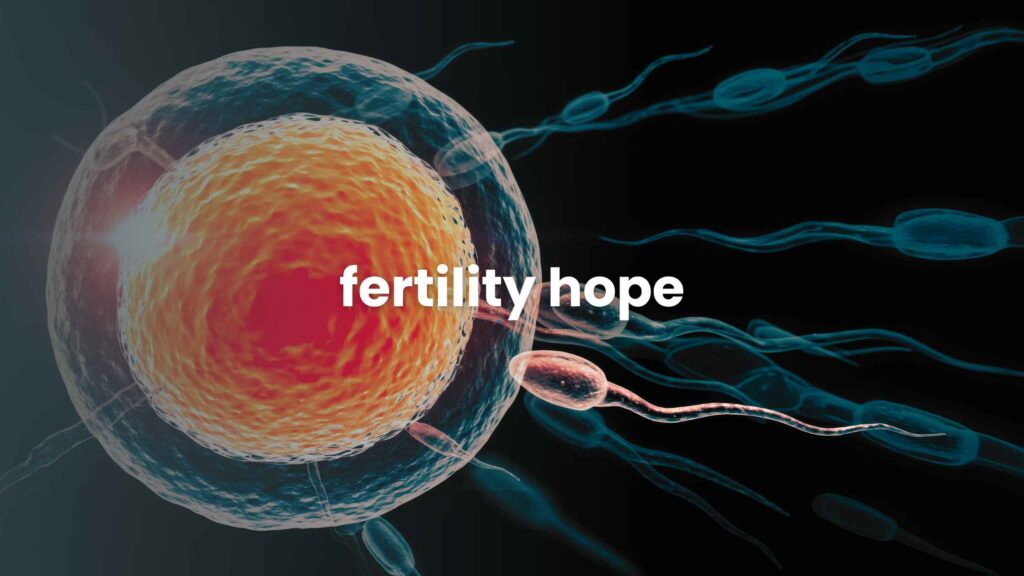
For decades, fertility care has followed a familiar script. Stimulate the ovaries. Retrieve the eggs. Hope for the best. IVF has helped millions, but it has also quietly accepted one uncomfortable truth: ovaries age, and medicine can only work around that fact, not change it.
Now a new wave of fertility research is questioning that assumption. A biotech therapy that has already been linked to successful births is forcing scientists and doctors to rethink what ovarian aging really means, and whether it might be slowed, or partially reversed.
That idea alone is enough to make both hope and skepticism spike in equal measure.
“What if the problem isn’t the eggs, but the environment?”
Traditional IVF focuses on egg quantity and timing. As women age, egg numbers decline and quality follows. This has been treated as a biological deadline, not a design flaw.
Recent studies suggest a more nuanced picture. Researchers have found that the ovarian environment, including blood flow, mitochondrial health, and cellular signaling, plays a major role in whether eggs mature properly. In other words, some eggs may still exist but are not getting the support they need to function well.
The new therapy builds on that insight. Instead of adding more hormones, it aims to restore aspects of the ovary’s internal ecosystem, encouraging dormant or underperforming follicles to behave more like they did years earlier.
“From lab theory to real babies”
This is not just a lab curiosity. Early clinical applications have already resulted in healthy births, according to biotech teams and fertility clinics involved in pilot programs. The numbers are still small, and researchers are cautious, but the results are difficult to ignore.
Women who previously had limited IVF success showed improved egg response after treatment. In some cases, IVF cycles that once yielded no viable eggs suddenly produced embryos suitable for transfer.
That does not mean this is a miracle cure. It does mean the long held belief that ovarian aging is a one way street may be outdated.
“Why this matters beyond IVF clinics”
If this approach continues to prove safe and effective, the implications stretch far beyond fertility clinics.
For one, it could reduce the number of IVF cycles needed, lowering physical strain and emotional burnout. Anyone who has gone through repeated rounds knows IVF is not just expensive, it is exhausting in ways no brochure prepares you for.
It could also shift the conversation around reproductive timelines. Not by encouraging endless delay, but by removing some of the panic driven decision making that comes from feeling biologically cornered.
And yes, it could change how we talk about age and fertility in general. Aging would still matter, but perhaps not as brutally as it does now.
“Caution is not pessimism”
It is important to be clear about what this therapy is not.
It is not a guarantee of pregnancy. It is not a reversal of time. And it is not ready for widespread use just yet. Long term safety data is still being collected, and regulatory approval varies by country.
Researchers themselves stress restraint. Fertility history is full of overhyped breakthroughs that faded once larger trials began. This is why many clinics are offering the therapy only within controlled protocols.
Optimism is warranted. Hype is not.
“A quiet shift in how we see reproductive aging”
What makes this development different is not just the technology, but the philosophy behind it.
Instead of treating aging ovaries as a failing system to be overridden, this approach treats them as a system that might be nudged back into balance. That shift mirrors broader trends in medicine, from gut health to brain aging, where restoration is slowly replacing replacement.
It is a softer idea, but potentially a more powerful one.
A future that feels less final
Fertility care has long been defined by deadlines, limits, and hard biological lines. This emerging therapy does not erase those lines, but it may blur them enough to give people more room to breathe, decide, and hope.
That alone would be a meaningful change.