
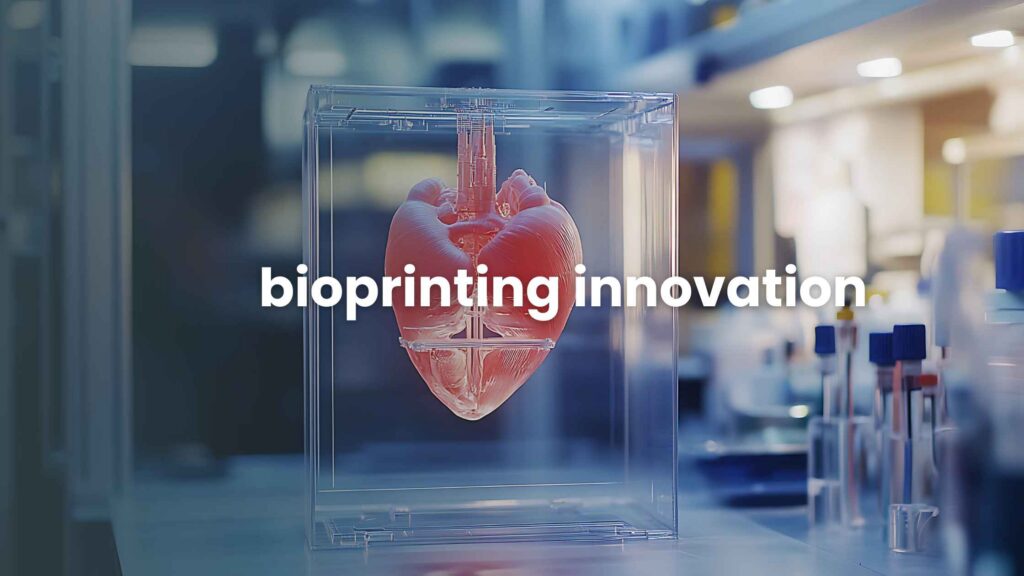
The world of medicine is undergoing a revolutionary transformation, and at the forefront of this change is 3D bioprinting. This cutting-edge technology has the potential to address the critical shortage of donor organs and reshape the future of organ transplants. But how exactly does it work, and what are the implications for patients, doctors, and the healthcare industry?
“From Blueprint to Body Part”
Imagine a world where doctors can print human organs on demand, tailored to a patient’s specific needs. This may sound like science fiction, but 3D bioprinting is making it a reality. The process involves layer-by-layer printing of living cells, biomaterials, and growth factors to create functional tissue structures. Similar to how traditional 3D printers use plastic or metal, bioprinters use bio-ink—a mixture of cells and nutrients—to build biological structures.
The applications of this technology extend beyond just organ creation. Researchers are already using bioprinted tissue to test drugs, study diseases, and develop personalized treatment plans.
The Organ Shortage Crisis
According to the World Health Organization (WHO), thousands of people die each year while waiting for an organ transplant. In the United States alone, over 100,000 people are on the national transplant waiting list. The gap between the number of available organs and the number of patients in need continues to widen.
This dire situation has fueled the urgency to find innovative solutions. 3D bioprinting offers a promising alternative by potentially eliminating the need for donor organs altogether.
Benefits of Bioprinted Organs
- Personalization: Organs can be printed using a patient’s own cells, reducing the risk of rejection.
- Availability: Bioprinted organs could be produced on demand, eliminating long waiting lists.
- Ethical Considerations: The technology reduces the reliance on organ donors and addresses ethical concerns associated with organ trafficking.
“Challenges on the Road to Success”
While the potential benefits are immense, the journey to fully functional bioprinted organs is not without obstacles.
Scientific and Technical Hurdles
Creating complex organs like the heart or liver involves replicating intricate structures and functions. Blood vessel networks, for instance, are essential for delivering nutrients and oxygen to tissues. Researchers are still working on perfecting these vascular systems within bioprinted organs.
Regulatory and Ethical Concerns
The regulatory landscape for 3D bioprinting is still evolving. Questions about safety, efficacy, and ethical implications need to be addressed. How do we ensure that bioprinted organs meet the same standards as donor organs? What are the long-term health implications for patients who receive them?
High Costs
Currently, the cost of bioprinting technology is prohibitive. However, as the technology advances and becomes more widely adopted, prices are expected to decrease.
Real-World Applications and Success Stories
Despite the challenges, there have been remarkable advancements in the field.
1. Bioprinted Skin for Burn Victims
Several companies are developing bioprinted skin for burn patients. These skin grafts are customized to fit the patient’s wound and promote faster healing.
2. Kidney Tissue Models
Researchers have successfully printed kidney tissue models that can be used for drug testing and disease modeling.
3. Heart Patches
Scientists have developed bioprinted patches that can be applied to damaged areas of the heart, potentially improving recovery after a heart attack.
“The Future Is Closer Than You Think”
The future of 3D bioprinting holds immense promise. Here are some trends and predictions for the coming years:
| Trend | Description |
|---|---|
| Personalized Medicine | Custom organs tailored to individual patients |
| Drug Development | Faster, more accurate drug testing |
| Collaborative Research | Global partnerships to accelerate progress |
| Ethical Bioprinting | Guidelines to ensure responsible use |
What Can We Expect Next?
In the coming decade, we may witness the first successful human transplant of a bioprinted organ. Advances in stem cell research, bio-ink formulations, and printing technology will likely play a pivotal role.
Moreover, the integration of artificial intelligence (AI) could further optimize the bioprinting process, from designing organ blueprints to monitoring tissue growth.
Wrapping Up
3D bioprinting is poised to revolutionize the field of organ transplantation. While challenges remain, the potential to save countless lives and transform healthcare is undeniable. As research and technology continue to evolve, the dream of printing fully functional human organs may soon become a reality.