
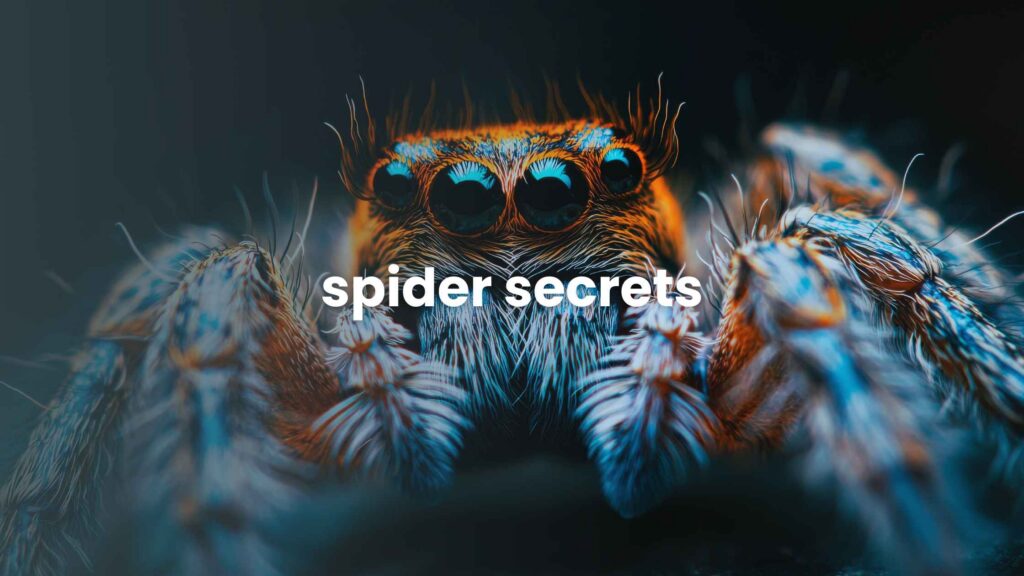
“Eight legs, zero trust”
Let’s be honest.
Most of us don’t see a spider and think, “Wow, what a fascinating creature.”
We think, “Nope.”
Preferably while grabbing a shoe.
Spiders have terrible PR. Too many legs. Too many eyes. Too much unexpected ceiling activity at 2 a.m.
But here’s the twist. Science shows that spiders are not just tiny horror movie extras. They are biological geniuses with skills that would make engineers jealous and survival abilities that feel almost supernatural.
Some of these facts are creepy.
Some are ridiculously cool.
All of them might make you look twice before squashing one.
Maybe.
They Can Fly Without Wings
“Ballooning into the sky”
Yes, fly.
Not in a superhero way, but still.
Certain spiders use a technique researchers call ballooning. They release ultra-thin silk threads into the air, which catch electrical charges and wind currents. This can lift them high into the atmosphere and carry them for miles.
Scientists have detected spiders thousands of meters above the ground.
Imagine looking out of an airplane window and thinking, “Is that a cloud?”
Nope. Kevin the spider going on vacation.
It’s less flying, more sky hitchhiking.
Still impressive for something smaller than your thumbnail.
Spider Silk Is Stronger Than Steel
“Nature’s secret super material”
Spider silk looks delicate, like something you’d accidentally walk through on a morning jog.
But material science tells a different story.
Pound for pound, many types of spider silk are stronger than steel and more elastic than rubber. It can stretch dramatically without snapping.
Researchers study it to design medical sutures, body armor, and even lightweight construction materials.
So that annoying web in your garden?
It’s basically high performance engineering.
Built overnight.
By an animal the size of a grape.
Meanwhile, we struggle to assemble IKEA furniture.
They Taste With Their Legs
“Your floor is basically a menu”
Spiders don’t rely only on sight.
They have sensory hairs and receptors on their legs that detect chemicals. This lets them “taste” the surfaces they walk on.
Imagine knowing what’s for dinner just by stepping on it.
Convenient. Slightly disgusting. Efficient.
This helps them identify prey, danger, and potential mates without needing to bite everything first.
Which, honestly, is probably better for everyone.
Some Species Keep Tiny Frog Bodyguards
“Roommates with benefits”
In parts of South America, certain large spiders share burrows with small frogs.
Yes, frogs.
At first glance, it looks like lunch waiting to happen. But researchers observed something strange. The spiders don’t eat the frogs. Instead, the frogs eat ants and insects that might harm the spider’s eggs.
It’s a mutual protection deal.
The spider offers shelter. The frog provides pest control.
It’s basically the animal kingdom’s version of splitting rent.
Nature is weirdly cooperative sometimes.
They Have Hydraulic Legs
“Walking with water pressure”
This one sounds like science fiction.
Spiders don’t move their legs only with muscles. They use hydraulic pressure. Fluid inside their bodies pushes their legs outward to extend them.
That’s why dead spiders curl up. The pressure system stops working.
Creepy fact? Yes.
Cool engineering trick? Also yes.
They’re basically tiny biological robots.
Which does not make them less scary, but it does make them impressive.
Most Spiders Are Shy, Not Dangerous
“You are not on their menu”
Here’s something that might help you sleep better.
Out of tens of thousands of known spider species, only a very small percentage pose any real threat to humans. Most bites happen only when spiders feel trapped or threatened.
Behavioral studies show that spiders prefer escape over confrontation.
So when one runs across your floor, it’s probably trying to leave, not planning your downfall.
You’re not the villain.
You’re just a very large, loud roommate.
They Can Regrow Legs
“Oops, lost a leg. No problem”
Some spiders can regenerate lost limbs during molting, especially when they’re young.
Imagine dropping your phone, breaking it, and then just growing a new one.
That’s their life.
It’s not instant, but over time, a new leg can form.
Nature really said, “Backup plan installed.”
They Help the Planet More Than You Think
“Silent pest control heroes”
Ecological research estimates that spiders collectively eat enormous quantities of insects every year, including many agricultural pests and disease-carrying bugs.
Without spiders, mosquito and fly populations could explode.
So the next time you see a web in the corner of your garden, you might actually be looking at free pest control.
They work night shifts too.
No salary required.
Minimal complaints.
Honestly, better than most employees.
Seeing Them Differently
Spiders probably won’t win any popularity contests soon.
Eight eyes don’t exactly scream “cuddly.”
But the more you learn, the harder it is to see them as simple creepy crawlies.
They’re engineers, chemists, survival experts, and sometimes unlikely frog landlords.
Tiny creatures doing wildly complicated things while we panic because one touched our arm.
Maybe the fear doesn’t fully go away.
But maybe it turns into a little respect.
And perhaps next time, instead of reaching for the shoe immediately, you’ll pause for half a second and think, “Okay… that’s actually kind of cool.”
Then you can still use the shoe.
No judgment.
Small Creatures, Big Surprises
The world is full of animals we overlook simply because they look strange. Spiders remind us that weird doesn’t mean useless. Sometimes it means brilliant, efficient, and quietly essential.
Not every hero wears a cape.
Some just hang upside down in your garage.