
“Your body remembers things your lifestyle forgot.”
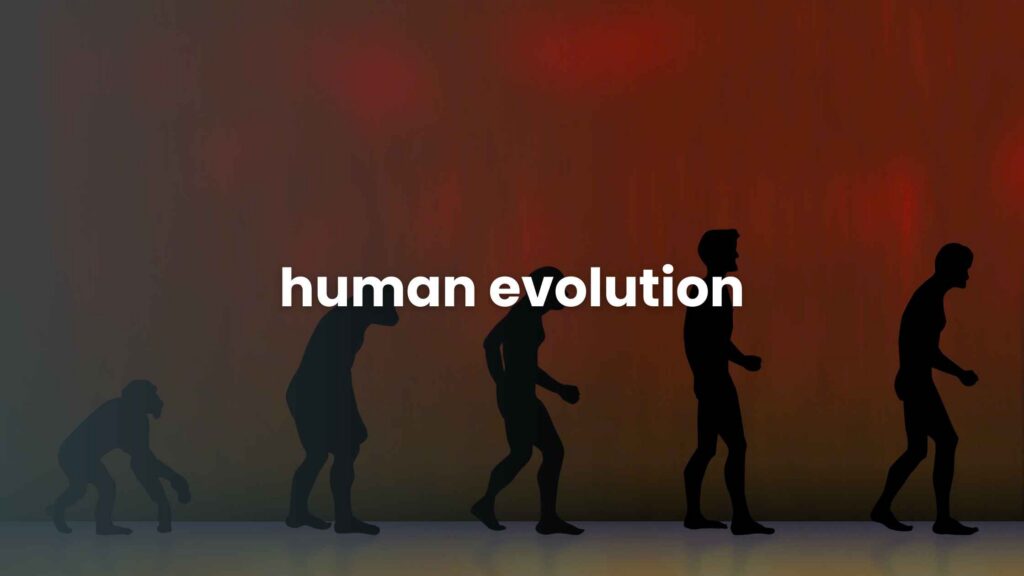
The human body is often described as a perfectly engineered system. But evolution does not work like a clean redesign. It works like an ongoing edit, leaving behind traces of older versions.
Hidden inside your body are structures that once had important survival functions, but today they are mostly leftovers from ancient biological history. Some still do small jobs. Others are simply hanging around like unused apps you forgot to delete.
Let’s explore a few fascinating body parts that science considers vestigial, meaning they no longer serve their original purpose.
“The Appendix: From Digestion to Mystery”
For decades, the appendix was considered completely useless. It sits quietly near the large intestine, occasionally causing trouble when inflamed.
Early evolutionary theories suggested that the appendix helped our plant-eating ancestors digest tough vegetation. As human diets changed, that function became less important.
More recent research suggests the appendix may act as a storage site for beneficial gut bacteria. So while it is not essential, it may still play a minor supporting role in immune health.
Still, millions of people live perfectly normal lives without it, which says a lot about how optional it has become.
“Wisdom Teeth: Evolution Didn’t Update the Jaw”
Wisdom teeth once helped our ancestors chew raw plants and tough meat. Their larger jaws had plenty of space for extra molars.
Modern humans, however, evolved smaller jaws while also inventing cooking, which softened food dramatically. The result is a dental traffic jam.
Studies in dental anthropology show that impacted wisdom teeth are now extremely common, making them one of the most removed body parts in modern medicine.
Your ancestors needed them. Your orthodontist probably disagrees.
“The Tailbone: Evidence of a Tail You No Longer Have”
The coccyx, better known as the tailbone, is a small triangular bone at the base of the spine.
It is a leftover from early primate ancestors who had functional tails for balance and movement. Today, it mainly serves as an attachment point for muscles and ligaments, but its original purpose has long disappeared.
Interestingly, rare medical cases have documented babies born with small tail-like structures, reminding scientists how evolution leaves traces behind.
“Goosebumps: A Survival Feature That Lost Its Job”
When you get cold or emotional, tiny muscles attached to hair follicles contract, causing goosebumps.
In animals with thick fur, this reaction makes the hair stand up to trap heat or make the animal appear larger when threatened.
Humans, however, lost most of their body hair thousands of years ago. The reflex stayed, but its usefulness did not.
Today, goosebumps are more connected to music and emotional moments than survival.
“Ear Muscles: The Forgotten Sound Trackers”
Some animals can rotate their ears toward sound. Humans still have the tiny muscles that once allowed this movement, but most people cannot control them.
A small percentage of individuals can still wiggle their ears, often discovered purely as a party trick.
Research in evolutionary biology suggests these muscles are remnants from ancestors who relied more heavily on directional hearing.
Now they mostly help during awkward talent-show moments.
“The Palmaris Longus: The Muscle You Might Not Even Have”
Here is a fun experiment. Place your arm on a table, touch your thumb to your pinky, and slightly lift your wrist. A small tendon may pop up in the center of your wrist. That is the palmaris longus muscle.
Or maybe not.
Around 10 to 20 percent of people are born without it, and they function completely normally. Surgeons often remove this tendon for reconstructive procedures because losing it has almost no impact on strength.
Evolution seems to be quietly phasing this one out.
“The Third Eyelid: A Hidden Reminder From Animal Evolution”
Inside the corner of your eye is a tiny fold called the plica semilunaris. It is a remnant of a third eyelid that still exists in birds and reptiles.
In those animals, the structure helps clean and protect the eye while maintaining visibility.
In humans, it no longer serves that purpose, but it remains as a small evolutionary footprint.
Your eyes still remember a feature you no longer need.
“Why Evolution Rarely Deletes Anything”
Evolution does not start over. It modifies what already exists. If a structure is not harmful, it often stays, even if its original function disappears.
This explains why the human body contains biological leftovers that feel slightly random.
They are not mistakes. They are history.
And like any old storage box, sometimes it is easier for nature to keep something than to throw it away.
Echoes of Our Ancient Blueprint
Vestigial body parts remind us that the human body is not a finished product but an ongoing story. Each leftover structure connects us to environments, diets, and survival strategies from thousands or even millions of years ago.
So the next time your wisdom teeth hurt or goosebumps appear during a dramatic movie scene, remember that your body is not just reacting to the present. It is also carrying memories from the past.