
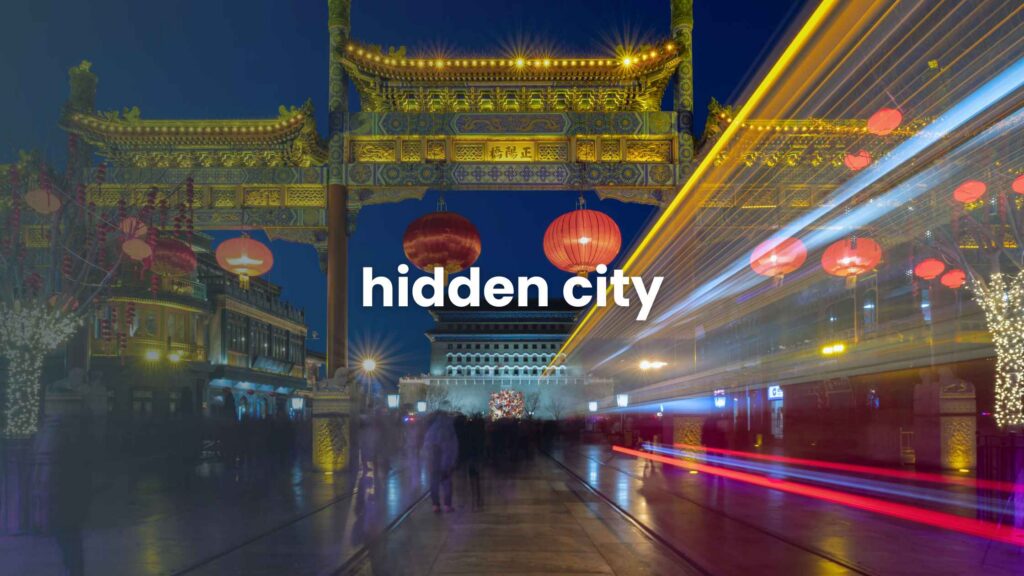
“A city beneath the city, built for a future that never arrived.”
Modern Beijing is all glass towers, ring roads, and neon lights. But deep below the sidewalks and subway lines lies a hidden world few tourists ever see. A vast network of underground bunkers once housed thousands of people, designed not for comfort, but for survival.
A Cold War City Goes Underground
“When the sky feels unsafe, people look down.”
During the late 1960s and 1970s, tensions between China, the United States, and the Soviet Union reached alarming levels. Fearing air raids or nuclear attacks, the Chinese government initiated one of the largest civil defense projects in history. Beneath Beijing, an estimated 85 square kilometers of tunnels, shelters, and bunkers were constructed.
According to urban historians and civil defense studies from Chinese academic institutions, these underground spaces were meant to shelter up to six million residents. The goal was simple: if war came, life would continue underground.
Not Just Bunkers, But a Parallel City
“This was survival with a floor plan.”
These spaces were not narrow panic rooms. They included dormitories, schools, clinics, factories, and even small theaters. Some tunnels were wide enough for vehicles. Others were designed to be sealed for weeks at a time, complete with ventilation systems and emergency water supplies.
Former residents interviewed in sociological studies recall sleeping in communal rooms and attending classes below ground during drills. It was not comfortable, but it was organized. Beijing was preparing for the unthinkable with remarkable efficiency.
From Fallout Shelter to Last Resort Housing
“When history changes, architecture adapts.”
By the 1990s, the threat of nuclear war had faded, but the bunkers remained. As Beijing’s population exploded, many of these underground spaces quietly transformed into informal housing. Migrant workers, priced out of surface-level apartments, moved underground.
Researchers from urban development studies documented cramped conditions, limited light, and poor ventilation. Despite this, rent was cheap, and proximity to city jobs made the bunkers a practical, if grim, solution.
At their peak, tens of thousands of people were estimated to be living below Beijing’s streets.
The Government Steps In
“Invisible cities are hard to regulate.”
In the early 2010s, authorities began closing many of these underground residences due to safety and health concerns. Fires, flooding risks, and lack of emergency exits made them unsuitable for long-term living.
Today, most bunkers are sealed, repurposed for storage, or used as commercial spaces such as parking or small businesses. A few sections are accessible through guided tours, offering rare glimpses into this hidden chapter of urban history.
Why This Story Still Matters
“The past doesn’t disappear, it just moves underground.”
Beijing’s bunkers are more than Cold War relics. They reveal how cities respond to fear, pressure, and rapid change. They also raise questions about housing, inequality, and how urban spaces are reused long after their original purpose fades.
Beneath the busiest streets on Earth lies proof that cities are layered, not just physically, but historically. Every step above ground echoes decisions made decades ago, in silence, under concrete ceilings.
When Cities Prepare for the Unthinkable
Beijing’s underground bunkers remind us that human ingenuity often emerges from anxiety. While the nuclear war they were built for never came, the bunkers shaped lives, communities, and the city itself. Sometimes, the most fascinating parts of a place are the ones you never see unless you know where to look.