
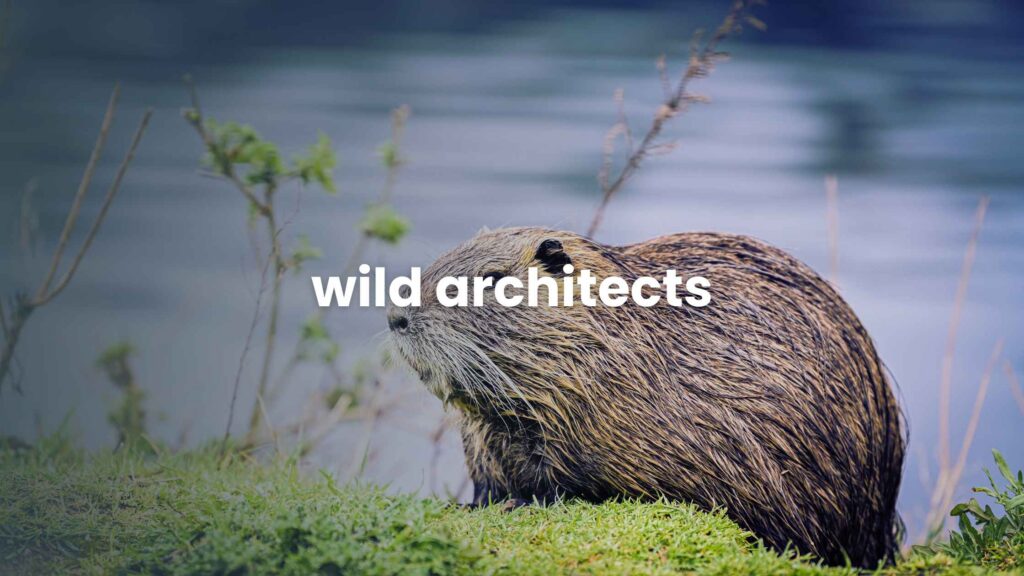
When we talk about ecosystems, we usually picture forests, reefs, or rain-soaked valleys shaped by climate and time. What we forget is that some of the most powerful ecosystem engineers walk, swim, or crawl around doing the work themselves. No blueprints. No committees. No human approval required.
These animals do not just live in nature. They redesign it. And once you notice them, it becomes impossible to unsee how much of the planet quietly depends on their daily routines.
“The animal kingdom’s accidental architects”
Scientists use the term ecosystem engineers for species that physically modify their environment in ways that affect other organisms. This is not a poetic metaphor. It is an ecological classification supported by decades of research in biology and environmental science.
What makes these animals fascinating is that they are not trying to save the planet. They are simply surviving. The ecosystem benefits are a side effect.
Here are five animals that reshape entire landscapes just by being themselves.
Beavers
“Nature’s most committed construction workers”
Beavers are famous for their dams, but the real magic happens after the wood is stacked. By slowing rivers and streams, beavers create wetlands that support fish, birds, amphibians, insects, and plant species that could not survive otherwise.
Ecologists have repeatedly shown that beaver wetlands increase biodiversity, improve water quality, and reduce flood damage downstream. In some regions, reintroducing beavers has restored ecosystems faster than human engineered solutions ever could.
They chew trees, flood valleys, and somehow make everything better.
Elephants
“The gardeners of the savanna”
Elephants shape ecosystems on a massive scale. As they move through landscapes, they knock down trees, trample vegetation, and dig for water. This may look destructive, but research shows it creates a mosaic of habitats that supports a wider range of species.
Their dung spreads seeds over long distances, often fertilizing the soil in the process. Some plant species rely almost entirely on elephants for seed dispersal.
In short, elephants do landscaping, reforestation, and irrigation, all while looking mildly annoyed about it.
Coral polyps
“Tiny animals with planetary impact”
Coral reefs are built by millions of small animals called polyps. Each polyp secretes calcium carbonate, slowly forming the structures that become reefs.
Marine biologists estimate that coral reefs support roughly a quarter of all ocean species, despite covering a small fraction of the sea floor. Reefs protect coastlines, provide food sources, and create complex underwater cities full of life.
All of this comes from creatures small enough to fit on a fingernail.
Prairie dogs
“The misunderstood urban planners”
Prairie dogs dig extensive underground tunnel systems that aerate soil, improve water absorption, and alter plant growth above ground. Their burrows create habitats for snakes, insects, owls, and small mammals.
Studies in grassland ecology show that areas with prairie dogs often support greater biodiversity than areas without them. Even grazing animals benefit from the improved plant diversity their digging encourages.
They are often labeled pests, which is ironic for animals doing free soil maintenance.
Earthworms
“The quiet foundation of healthy soil”
Earthworms rarely get credit because they are not charismatic. But soil scientists have spent decades documenting their impact on ecosystems.
By breaking down organic matter and creating tunnels, earthworms improve soil structure, nutrient cycling, and water retention. Healthier soil supports stronger plant growth, which in turn supports entire food webs.
Charles Darwin himself wrote extensively about earthworms, noting that much of the world’s fertile soil passed through their bodies at some point.
Not glamorous, but extremely effective.
“Why this matters more than we think”
These animals remind us that ecosystems are not static backdrops. They are living systems shaped by interaction. When key species disappear, the effects ripple outward in ways that science is still working to fully understand.
Protecting these animals is not about sentimentality. It is about preserving the invisible systems that keep environments stable and resilient.
Humans often try to fix nature with technology. Sometimes the smartest move is to step aside and let the original engineers do their thing.